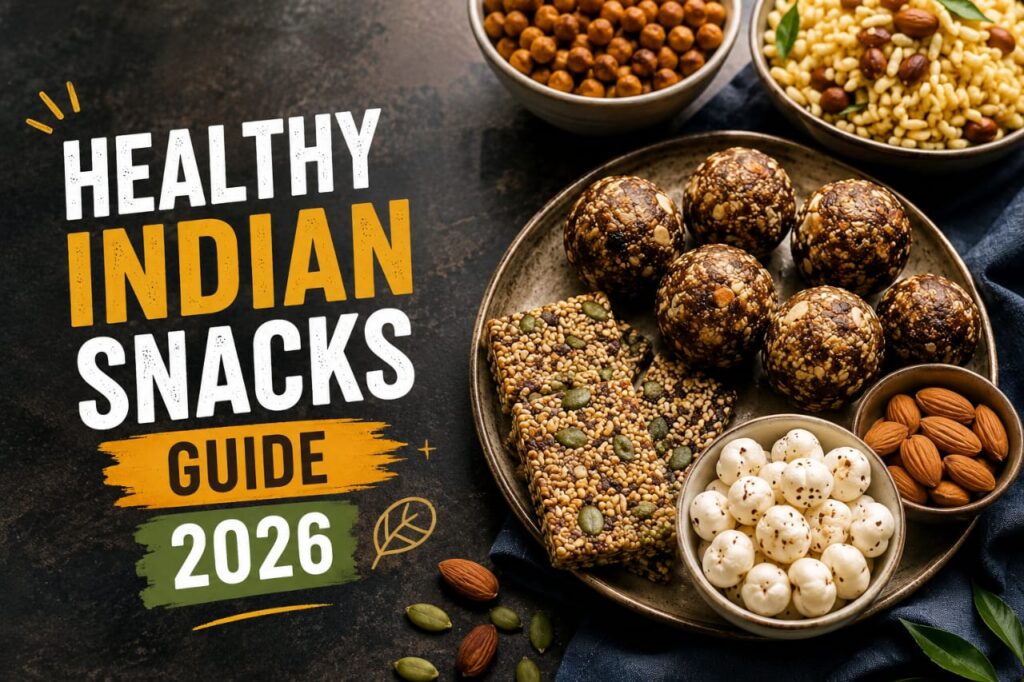
15 Best Healthy Indian Snacks for Travel (Flights, Road Trips & Kids' Trips) — 2026 Guide
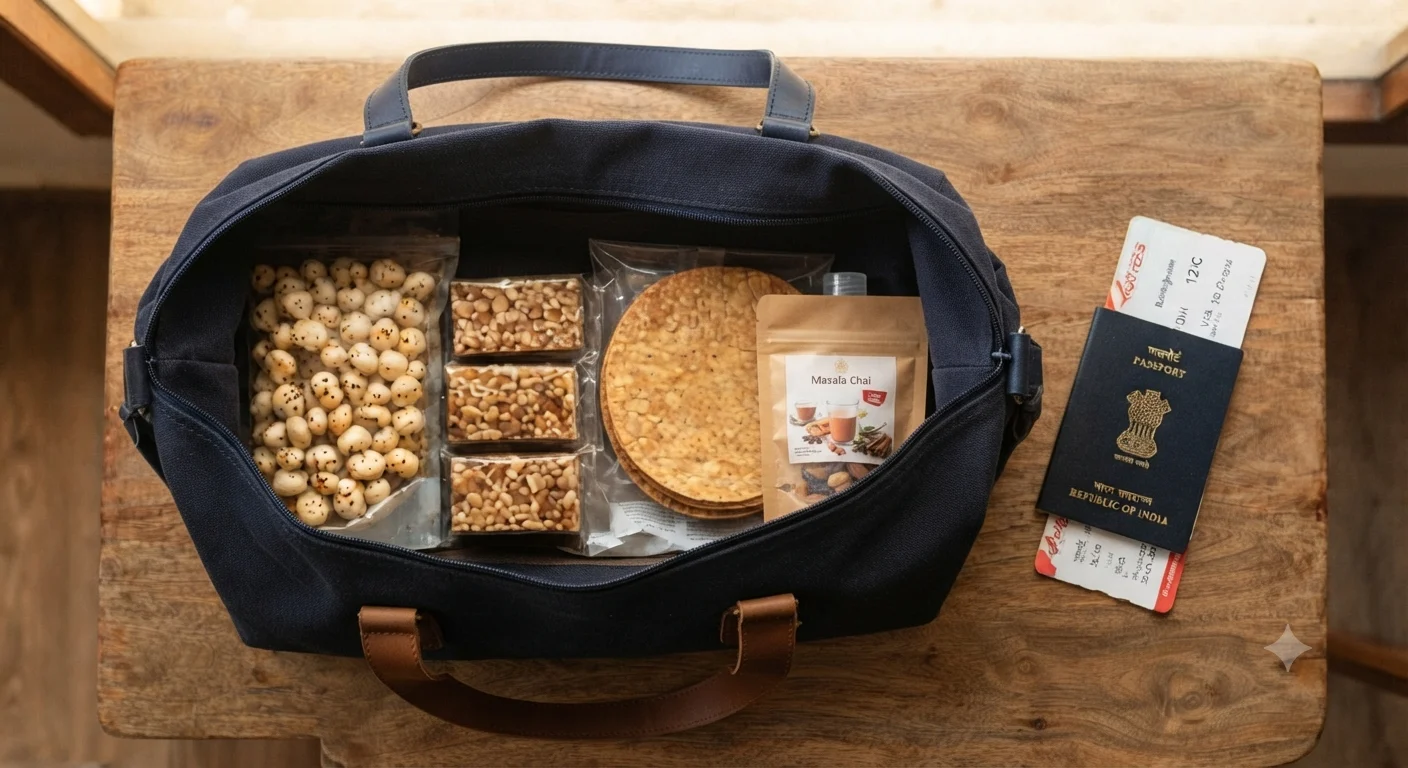
Ever landed starving because the only food on your flight was a stale sandwich? Indian kitchens are full of naturally travel-friendly snacks — roasted, spiced, and dry by tradition — that survive heat, long hours, and zero refrigeration far better than packaged alternatives.
In this guide, you’ll find the best healthy Indian snacks for travel, how to make homemade versions that stay fresh for days, and which options work best for flights, road trips, kids, and babies.
As someone who has packed snack boxes for a dozen family road trips and more flights than I can count, here’s what actually survives a 10-hour journey — and what turns into a sad, oily mess by hour three.
This guide focuses specifically on travel. For the full picture — snacks by time of day, health goal, and diet — see our complete guide to healthy Indian snacks.
What Makes a Snack "Travel-Friendly"?
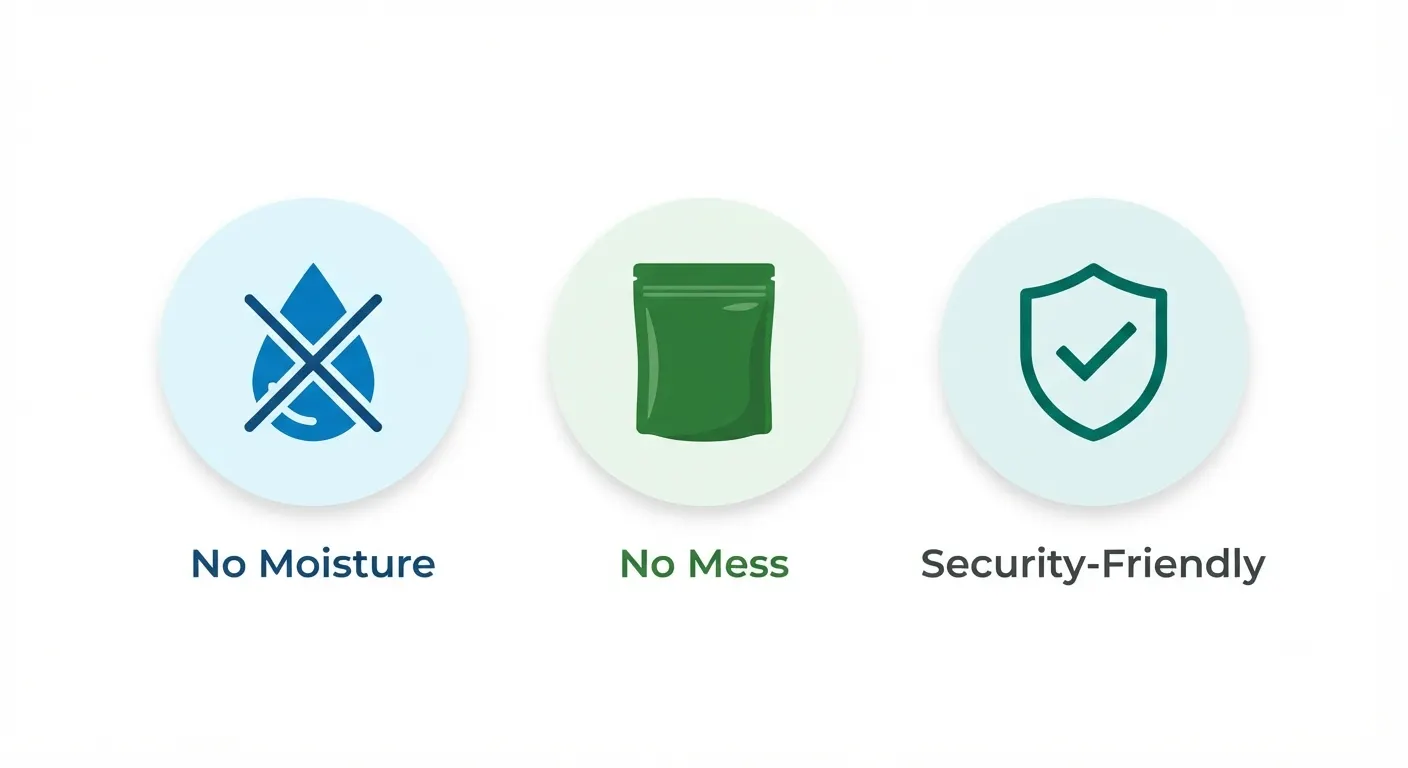
A travel-friendly snack survives temperature changes, doesn’t spoil without refrigeration, and doesn’t create a mess in a bag. It works by having low moisture content and minimal oil, with natural preservation through roasting rather than deep-frying. Most commonly used for flights, road trips, and long train journeys.
A genuinely good travel snack also needs to:
- Travel light — high nutrition per gram, since luggage space is limited
- Satisfy hunger — protein or fiber-rich, not just empty carbs
- Clear security easily — solid, dry foods rarely raise questions, unlike liquids or gels
What Are the Best Dry Snacks for Traveling?
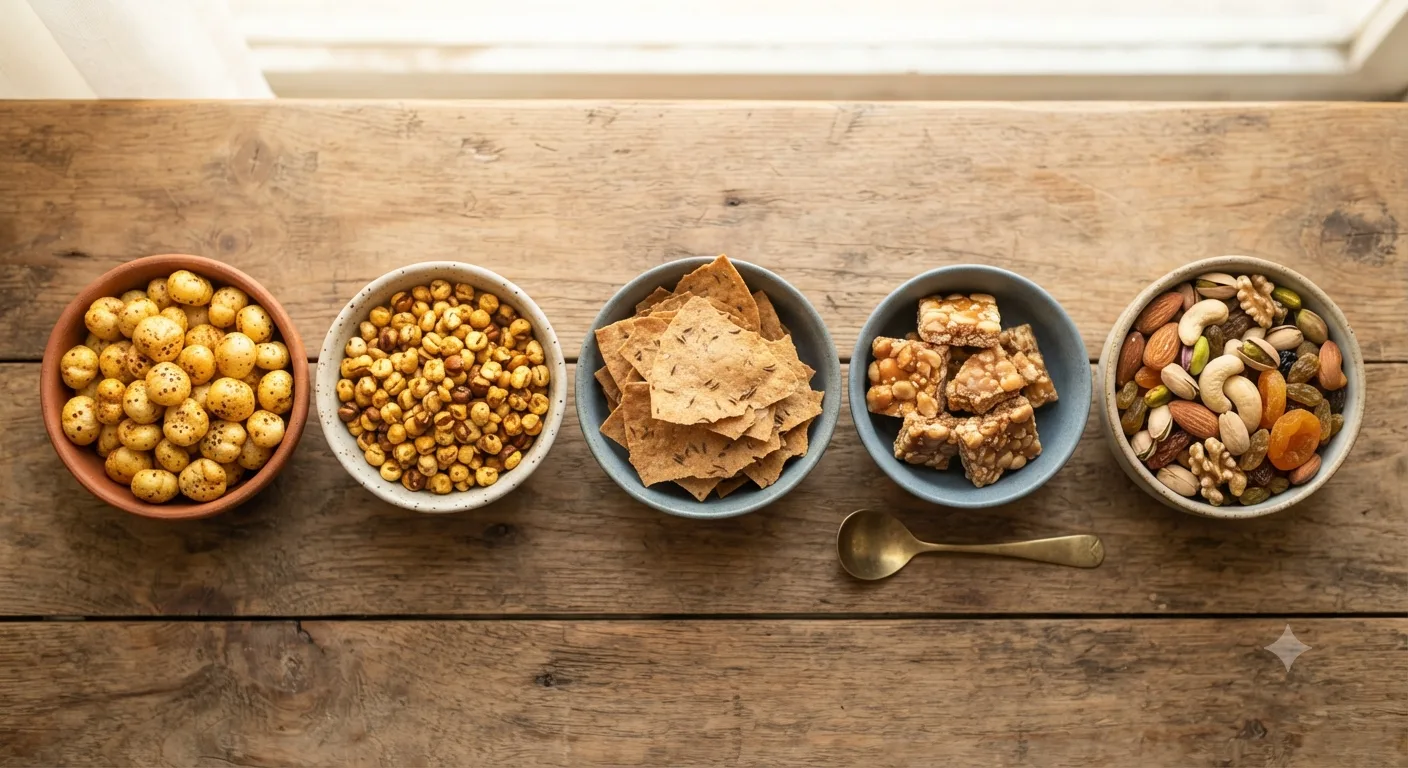
Dry snacks for traveling are foods with little to no moisture — roasted nuts, murmura mix, khakhra, and chikki — that resist spoilage and stay crisp for days without refrigeration. They work by removing the water content bacteria and mold need to grow. Most commonly packed for flights, treks, and multi-day road trips.
- Roasted makhana (fox nuts) — light, crunchy, easy to season
- Roasted chana (chickpeas) — high in protein and fiber
- Khakhra — thin, baked wheat crackers that barely take up space
- Til or peanut chikki — a dense, jaggery-based energy snack
- Dry fruits and nuts trail mix — almonds, cashews, raisins, walnuts
Why Dry Snacks Last Longer Without Spoiling?
Low moisture prevents the bacterial and fungal growth responsible for spoilage. Roasting instead of frying also cuts oil content, which slows down rancidity — the main reason fried snacks go stale within a day or two.
What Are the Best Healthy Travel Snacks Overall?
The best healthy travel snacks overall balance protein, fiber, and natural energy without added sugar or excess oil. Roasted nuts, seed mixes, and fruit-and-nut chikki are strong all-around choices because they combine long shelf life with real nutritional value.
A well-rounded snack box covers one item from each category:
- Protein — roasted chana, peanuts, or moong dal
- Fiber — dry fruits or roasted makhana
- Quick energy — jaggery-based chikki or dates
- Crunch — khakhra or baked mathri
If you’d rather skip the prep, Freak Fit Foodie’s protein bars and laddus cover the protein and quick-energy boxes in one sealed, ready-to-eat pack — useful on the mornings you’re packing a bag, not a kitchen.
How to Make Homemade Indian Snacks for Travelling?
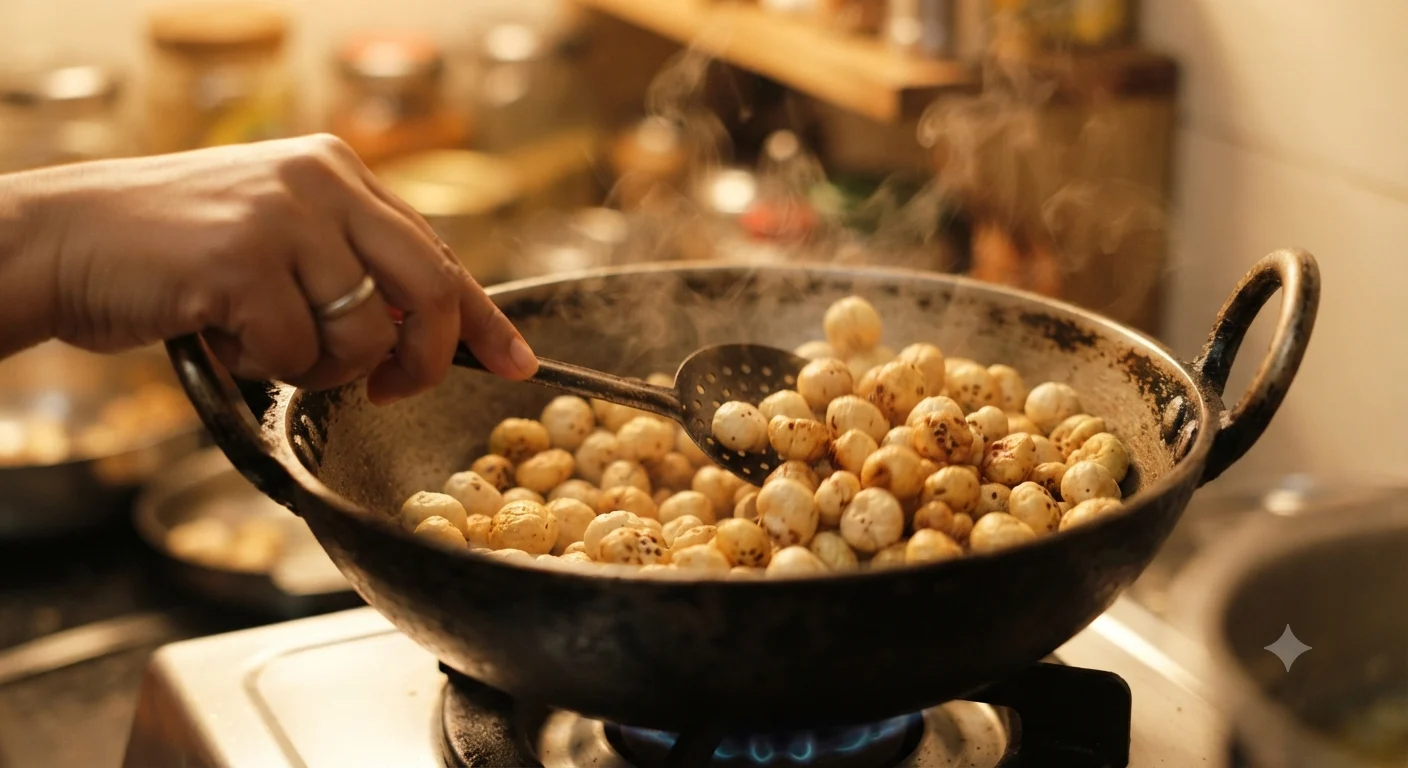
Dry-roast ingredients like makhana, chana, or oats in a heavy-bottomed pan without oil, season lightly, and cool completely before storing in an airtight container. Best prepped a day or two before departure so everything cools and settles fully.
- Roasted masala makhana — dry-roast in ghee, add turmeric, chili powder, salt
- Homemade chivda — flattened rice roasted with peanuts and mild spices
- Nutri-oats energy balls — oats, dates, and nuts, rolled and dried, no baking
- Dry fruit and jaggery ladoo — a naturally sweet, energy-dense option
Thepla, Paratha & Bhakhri: The Meal-Replacement Option
For something more filling, dry-cooked flatbreads are the traditional answer. Methi thepla, stuffed parathas, and bhakhri, cooked without excess oil until slightly crisp, work as a light meal rather than a bite. Cool fully and stack with parchment paper to avoid sogginess. They stay good 8–10 hours at room temperature, up to 2 days if cool and dry — carry a dry masala instead of wet chutney.
Storage Tips to Keep Homemade Snacks Fresh for 5+ Days
Use airtight glass or steel containers, and let snacks cool completely before sealing — trapped heat causes condensation, the fastest way to spoil a batch. For trips beyond 5 days, add a moisture-absorbing sachet or a little raw rice to the container. Avoid plastic bags for oily snacks like chikki, since oil seeps through.
What Are the Best Flight Snacks You Can Carry?
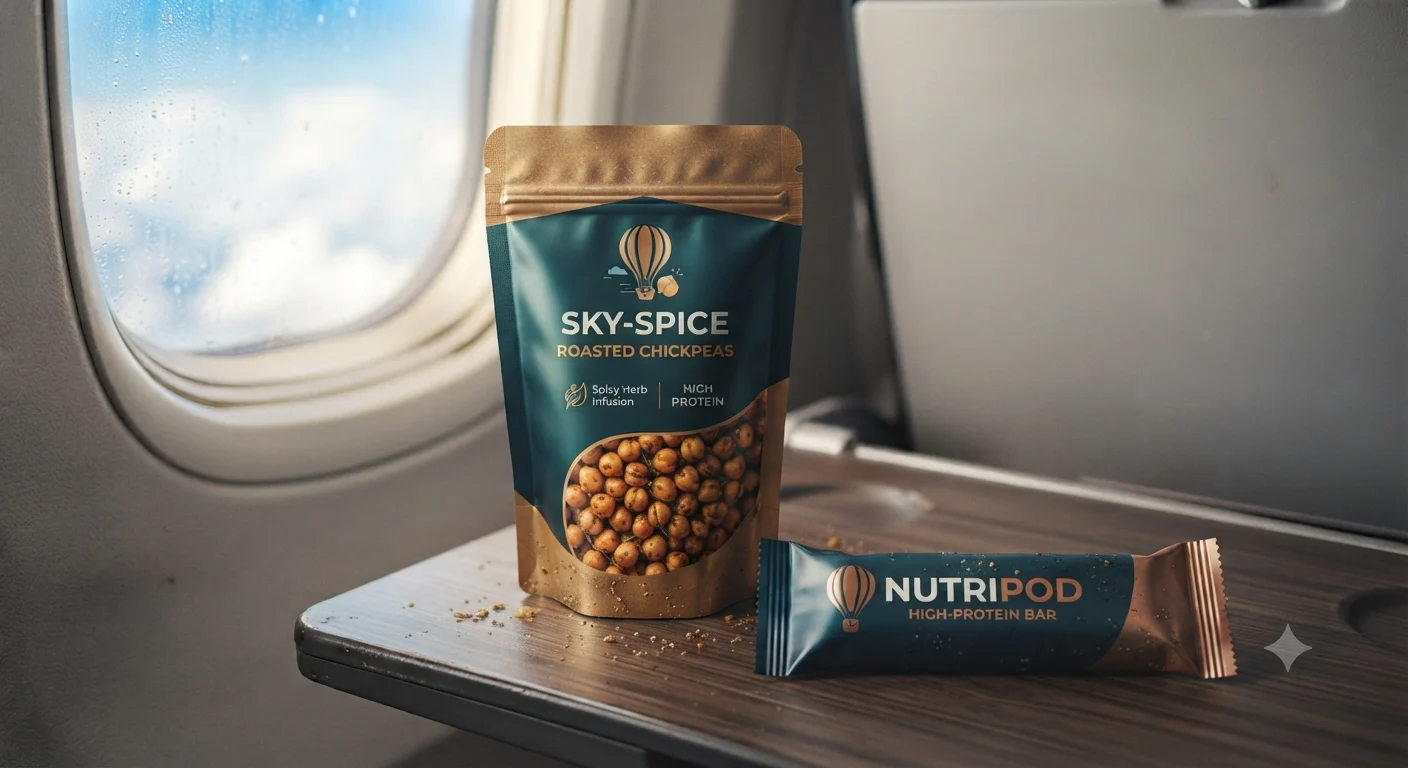
The best flight snacks are solid, dry foods like roasted nuts, khakhra, and dry chivda that don’t count as liquids or gels, so they pass security easily. Most commonly packed for long-haul flights where meals may be delayed or limited.
- Roasted makhana or chana in a resealable pouch
- Khakhra or plain mathri (avoid heavily oiled ones)
- Individually wrapped chikki bars
- A small box of homemade trail mix
Tip: Avoid chutneys or anything liquid — security treats pastes the same as gels. For international routes, sealed and labelled snacks clear customs more easily than loose ones; Australia and New Zealand in particular enforce strict biosecurity checks on dry fruit and grains, so check destination rules first.
Cabin air is drier and pressure lower than at ground level — research commissioned by Lufthansa (Fraunhofer Institute) found this dulls taste and smell by up to 30%, which is why in-flight snacking feels less satisfying even when the food is fine. The real problem with moist snacks like cut fruit, dairy, or mayo sandwiches is that they sit unrefrigerated for hours, not the cabin air. Skip bananas (turn mushy), cheese or paneer (smell strongly), and fried snacks or boiled eggs (bloating and odor at altitude).
What Are Good Road Trip Snacks?
Good road trip snacks are easy to eat one-handed, don’t need refrigeration, and hold up in car heat for hours. Roasted peanuts, chikki, dry chivda, and whole fruits work well since they don’t spoil without an ice box.
- Masala peanuts or roasted chana for the driver
- Chikki bars for a quick energy boost on long stretches
- Fresh fruit like bananas or guavas for day one, dry fruits after
- Homemade thepla or bhakhri for the first 8–10 hours
Hydration matters too: dry snacks don’t hydrate you, and salty ones increase thirst. Carry a refillable water bottle, ORS or electrolyte sachets for hot stretches, and skip sugary sodas, which dehydrate further. Avoid mayo-based sandwiches and cream sweets — they spoil fast without an ice box.
What Are Healthy Travel Snacks for Kids?
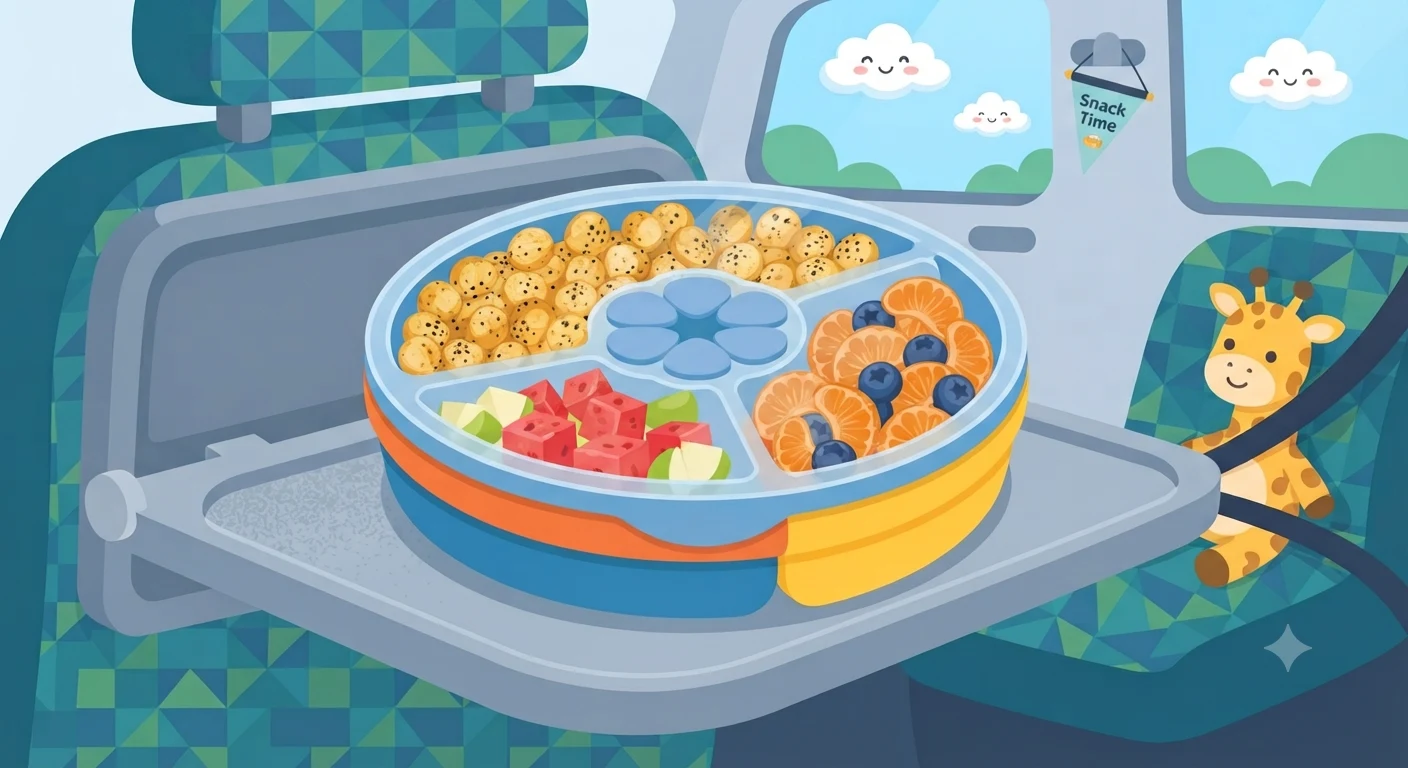
Healthy travel snacks for kids should be bite-sized, low-mess, and mildly spiced for easy self-feeding in a car seat or airplane tray. Roasted makhana, mini idli bites, and fruit-and-nut ladoos work well since they’re soft to chew and won’t stain clothes.
- Plain roasted makhana (easy to chew, low choking risk for older kids)
- Homemade oats and date energy bites
- Steamed mini idlis or dhokla cubes for short trips
- Cut fruit in a spill-proof container for the first few hours
Hiding Veggies and Nutrition in Kid-Friendly Snacks
Blending finely grated carrots, beetroot, or spinach into dhokla, cheela, or stuffed parathas adds nutrition without changing the taste much. Sweetening oats or moong dal ladoos naturally with dates avoids the sugar crash that comes with packaged snacks.
What Are the Best Travel Snacks for Long Trips?
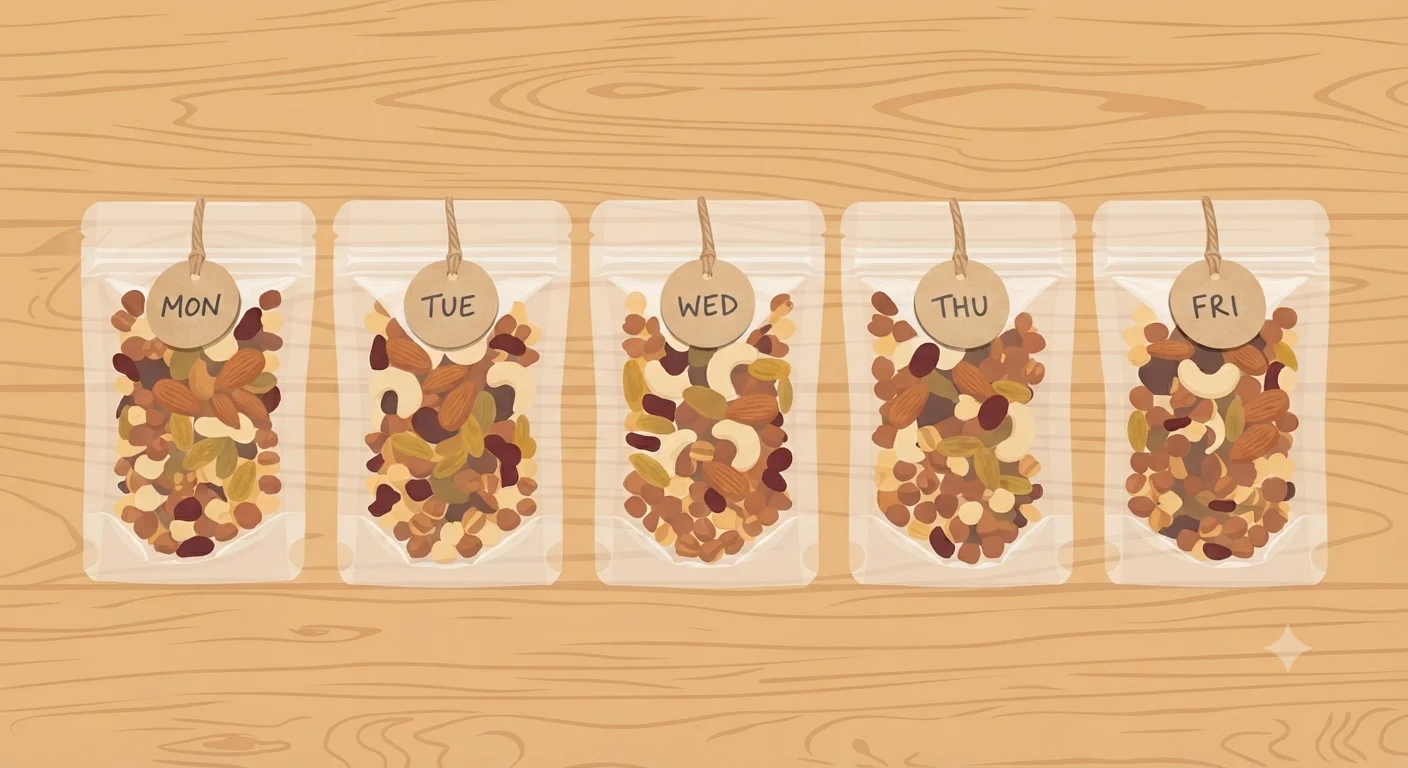
The best snacks for long trips (5+ days) are shelf-stable and nutrient-dense so they can be rationed across the journey without spoiling. Roasted chana, chikki, and vacuum-friendly nut mixes hold up better than fresh or semi-moist snacks.
- Divide snacks into daily portion pouches to avoid running short later
- Prioritize dense, calorie-rich options like chikki over bulky low-calorie ones
- Carry electrolyte sachets for hot climates
- Favor jaggery- or salt-preserved snacks over anything dairy-based
What Are Safe Healthy Travel Snacks for Babies?
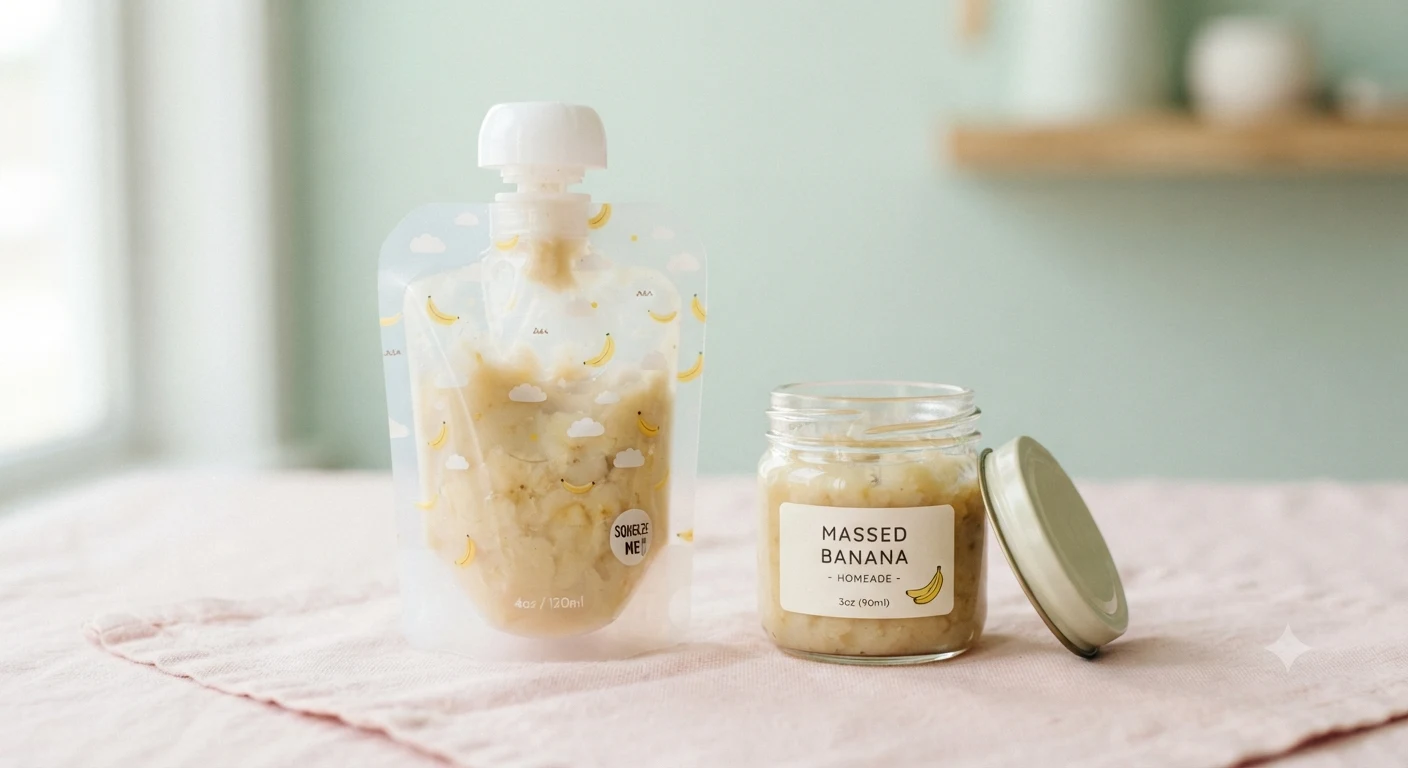
Safe travel snacks for babies are soft, easily mashed, age-appropriate foods free of added salt, sugar, or choking hazards. Mashed banana, ragi cookies, soft idli pieces, and fruit purées in reusable pouches are commonly recommended for babies over 6 months, based on individual readiness for solids.
- Ragi or wheat-based baby cookies (soft, low-sugar)
- Mashed banana or steamed sweet potato in a squeeze pouch
- Soft idli or dosa pieces, cooled to room temperature
- Boiled, mashed moong dal for a protein boost
Important: Introduce any new food a few days before travel, not during the trip, and consult your pediatrician if unsure.
Frequently Asked Questions
How can I eat healthy while traveling?
How do I keep food fresh while traveling without a fridge?
What's the best way to pack food for travel?
What are must-have snacks for a long trip (5+ days)?
What can I eat while traveling by bus?
The Bottom Line
Healthy Indian snacks for travel don’t need to come from a packet — roasted makhana, chana, chikki, and homemade chivda have done the job for generations. Choose dry, low-moisture snacks, pack them airtight, and match the snack to the trip: light for flights, energy-dense for road trips, soft and mild for kids and babies.
Now it’s your turn — pick two or three from this list and see which survive your next trip best. And on the trips where you don’t have time to roast, portion, and pack from scratch, Freak Fit Foodie makes that easier: high-protein bars, laddus, cookies, and brownies, sealed, no refined sugar, no preservatives, and built to survive a bag the same way the homemade snacks in this guide do. Shop the range →
Sources
- Transportation Security Administration (TSA) — 3-1-1 Liquids Rule
- World Health Organization — Infant and Young Child Feeding fact sheet (solid foods from 6 months)
- Australian Government, Department of Agriculture, Fisheries and Forestry — Bringing or Mailing Goods to Australia
- New Zealand Ministry for Primary Industries — What food you can bring to NZ
- Fraunhofer Institute (commissioned by Lufthansa), via Lonely Planet — cabin humidity and low pressure cut taste-bud sensitivity by ~30%; a taste-perception finding, not about food spoiling faster
About the Author
Aman Choudhary is the founder of Freak Fit Foodie, where he writes about protein-forward Indian snacks and the nutrition science behind them, drawing on established nutrient guidelines and peer-reviewed research on satiety and macronutrients. This guide applies that same rigor to travel snacking: what actually survives real-world conditions like cabin pressure, car heat, and days without refrigeration, not just what sounds healthy on a label.