7 Dry Fruit Laddu Ingredients: The Complete List And the Ratios That Actually Matter
Two laddus can have the same five ingredients written on the label — and still turn out totally different. One holds together, tastes balanced, and actually gives you protein. The other falls apart, tastes like compressed sugar, and offers little nutritional value.
The difference isn’t what’s in it. It’s how much of each thing goes in.
This guide breaks down every ingredient in a dry fruit laddu — what it does, why it’s there, and where most recipes go wrong. Want the backstory of the protein laddu itself? Check our Protein Laddu Hub guide.
Quick Answer: A dry fruit laddu is made from 6 ingredient groups — a binder (dates), nuts, seeds, a fat (ghee), whey protein, and spices. Each protein laddu gives you roughly 130–140 kcal, 5–6g protein, and about 6g sugar. Those numbers depend not just on the ingredients, but on the ratio of binder to protein source.
Jump to a section:
● The 6 core ingredient categories
● Dates — the binder
● Nuts — protein and texture
● Whey protein — what makes it a “protein” laddu
● Seeds, ghee, gond, spices
● Traditional vs. protein-fortified — the real ratio math
● Ingredient substitutions — what actually works
● How to read a laddu ingredient list before you buy
● Myth vs. Fact
● FAQ
The 6 Core Ingredient Categories at a Glance
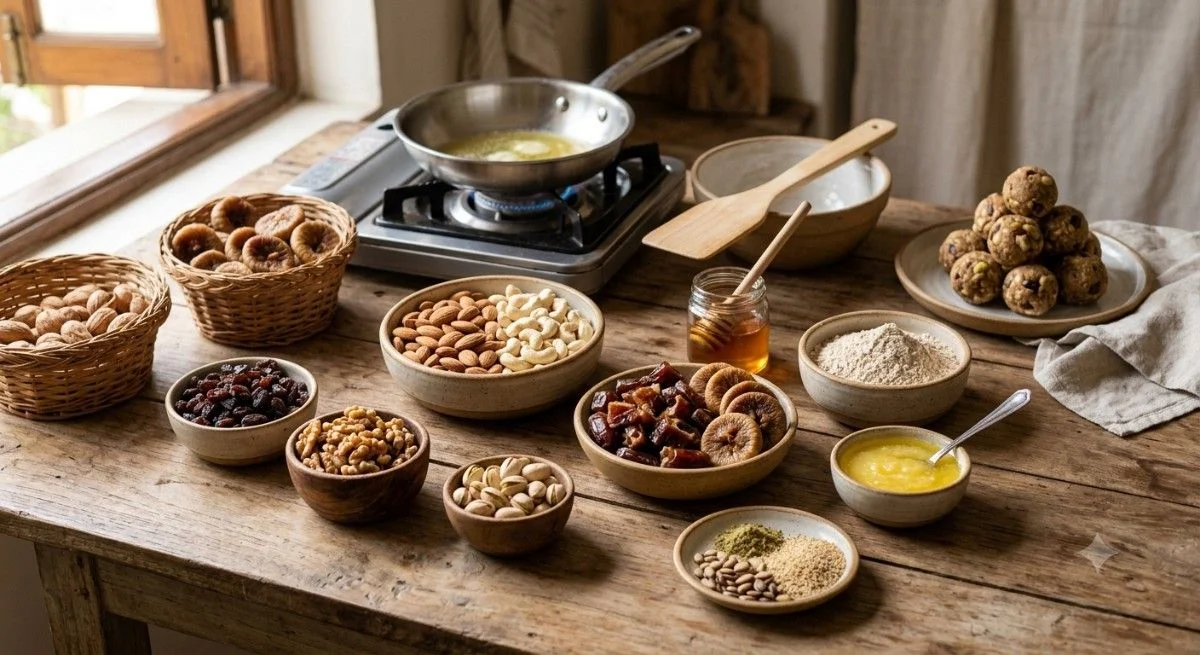
Every dry fruit laddu — traditional or protein-fortified — is built from the same 6 categories. Only the amount of each one changes.
| Category | Common Ingredients | What It Does |
| Binder | Dates | Holds everything together, adds natural sweetness |
| Nuts | Almonds, cashews, walnuts | Protein, healthy fats, texture |
| Seeds | Flax, pumpkin, melon seeds | Fibre, plant protein, bite |
| Fat | Ghee | Binding, flavour, shelf life |
| Protein | Whey protein isolate/concentrate | Boosts protein count |
| Extras | Gond, cardamom, dry ginger | Texture and flavor balance |
Nothing fancy here. What makes a laddu good or mediocre isn’t which ingredients you use — it’s how much of each goes in.
Dates — The Binder Every Laddu Depends On
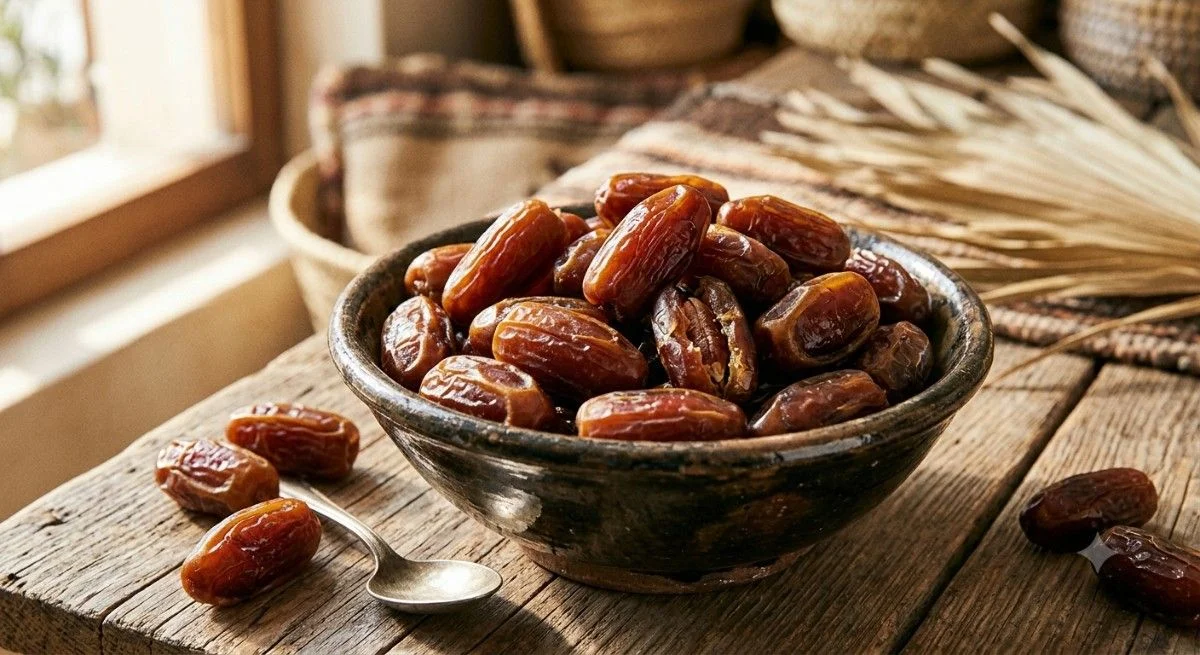
Dates aren’t just for sweetness — they’re the glue. Once blended into a paste, their natural sugar and fibre stick the nuts, seeds, and gond together so the laddu holds its shape. Use too little date paste, and the laddu falls apart the moment you pick it up.
Dates have about 282 calories per 100g — mostly natural sugar, plus fibre, potassium, magnesium, and iron (USDA FoodData Central, Dates, Deglet Noor). That fibre is exactly why whole dates behave differently in your body compared to the same amount of refined sugar.
Medjool dates are soft and blend into a paste easily. Dry dates (khajur) are firmer and work better when chopped rather than blended. That’s why this recipe uses Medjool — it’s better suited for binding.
Common mistake: cutting down date paste to “reduce sugar.” It backfires — the laddu won’t hold together, so you end up adding extra ghee to fix it anyway.
For exact quantities, roasting time, and shaping steps, see our dry fruit laddu weight-loss guide.
Nuts — Where Traditional Protein and Texture Come From
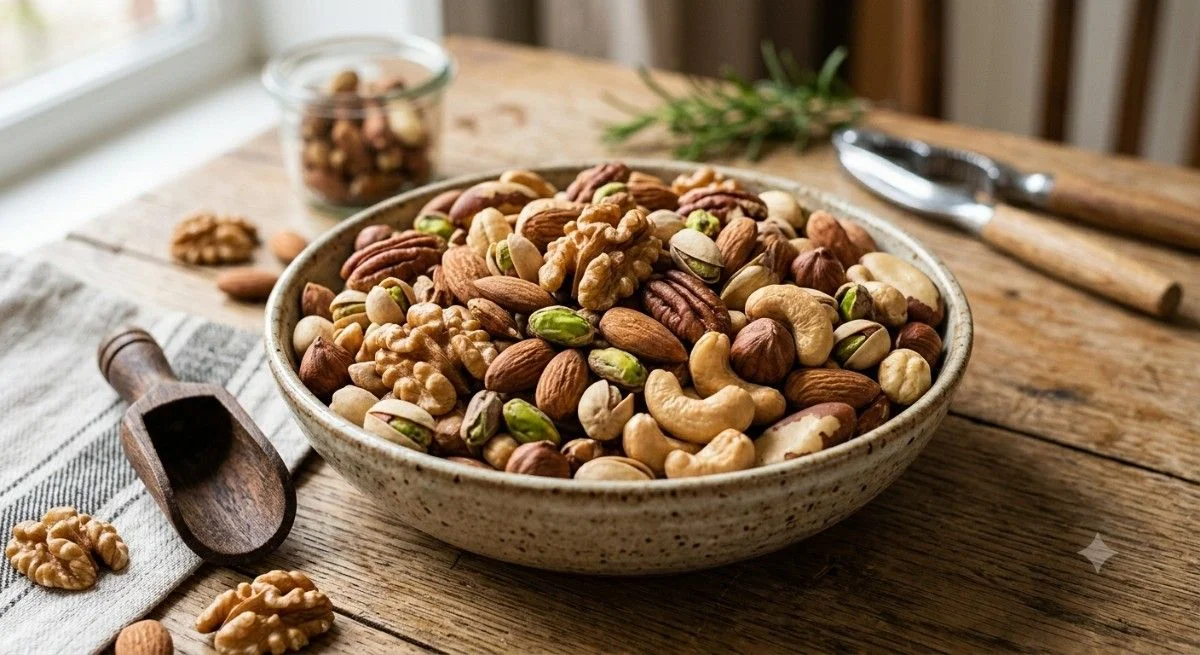
Before whey protein came into the picture, nuts did all the protein work in a laddu. They still do most of it.
Here’s what 100g of raw, unroasted nuts contains (USDA FoodData Central) — note these numbers change if your recipe uses roasted nuts, so check against your own prep: Almonds give you the best protein-to-fat ratio, plus a nice crunch. Cashews add creaminess and help bind the mix. Walnuts bring the most omega-3s, but they’re also the most calorie-dense of the three — worth knowing if you’re counting calories.
Nut |
Calories |
Protein |
Fat |
Source |
| Almonds | 579 kcal | 21.2g | 49.9g | FDC 170567 |
| Cashews (raw) | 553 kcal | 18.2g | 43.9g | FDC 170162 |
| Walnuts | 654 kcal | 15.2g | 65.2g | FDC 170187 |
Roasted vs. raw
Roasting brings out flavour and extends shelf life a little, but over-roasting can make ground nuts go rancid faster inside a laddu mix. We roast lightly rather than heavily for this reason — it’s our own choice, not a fixed rule everyone follows.
Ideal nut-to-date ratio: There’s no single “correct” number — it depends on whether you’re aiming for more protein, fewer calories, or longer shelf life. In our own testing, roughly 1 part nuts to 1.5–2 parts date paste (by weight) holds together well without turning overly sweet. Treat this as a starting point to test with your own ingredients, not a fixed rule. Too much date paste = overly sweet, soft laddu. Too little = it won’t bind, no matter how good the nuts are. Our recipe leans toward less date paste to keep sugar lower without losing the bind — full split covered in the weight-loss guide.
Whey Protein — The Ingredient That Makes It a “Protein” Laddu
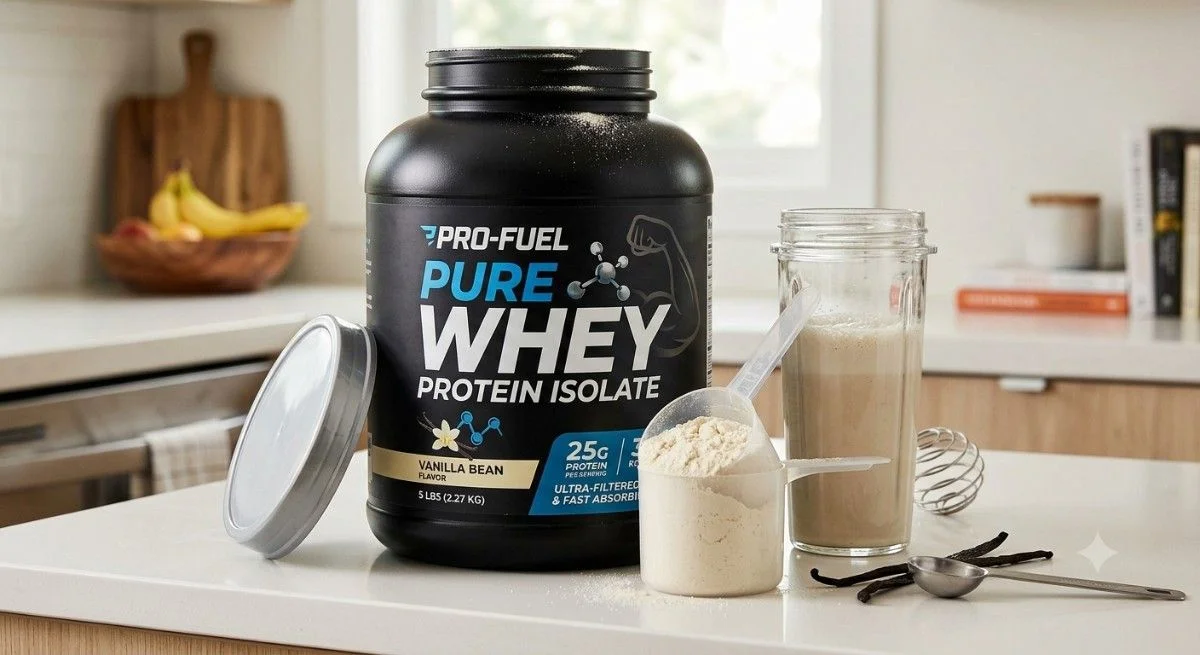
This is the ingredient that turns a regular dry fruit laddu into a protein laddu — and it’s also the trickiest one to get right.
Isolate vs. concentrate: Isolate goes through heavier filtering, so it’s 90%+ protein with very little fat or lactose. Concentrate is around 70–80% protein, keeping more fat and lactose, which gives it a slightly richer taste (Cleveland Clinic, “Whey Protein: Health Benefits and Potential Side Effects”). Isolate blends more smoothly into a dense mix like a laddu.
Whey doesn’t replace anything traditional — it adds to the nut protein; it doesn’t swap out dates or ghee. Here’s the real challenge: whey powder soaks up moisture, and it pulls that moisture straight out of the date paste, which changes how everything binds. Add too much whey without adjusting the rest of the recipe, and you get a dry, crumbly laddu. This is exactly the problem we had to solve in our own formulation — see how much whey goes into our protein laddu.
Whey also has a distinct milky taste, which is why recipes with whey usually add more cardamom and dry ginger — to balance both the date sweetness and the whey aftertaste.
How much protein is in one laddu?
A balanced dry fruit protein laddu typically lands around 5-6g of protein per laddu, with 130-160 kcal.
Seeds, Ghee, Gond & Spices
Seeds — small ingredient, big nutritional lift
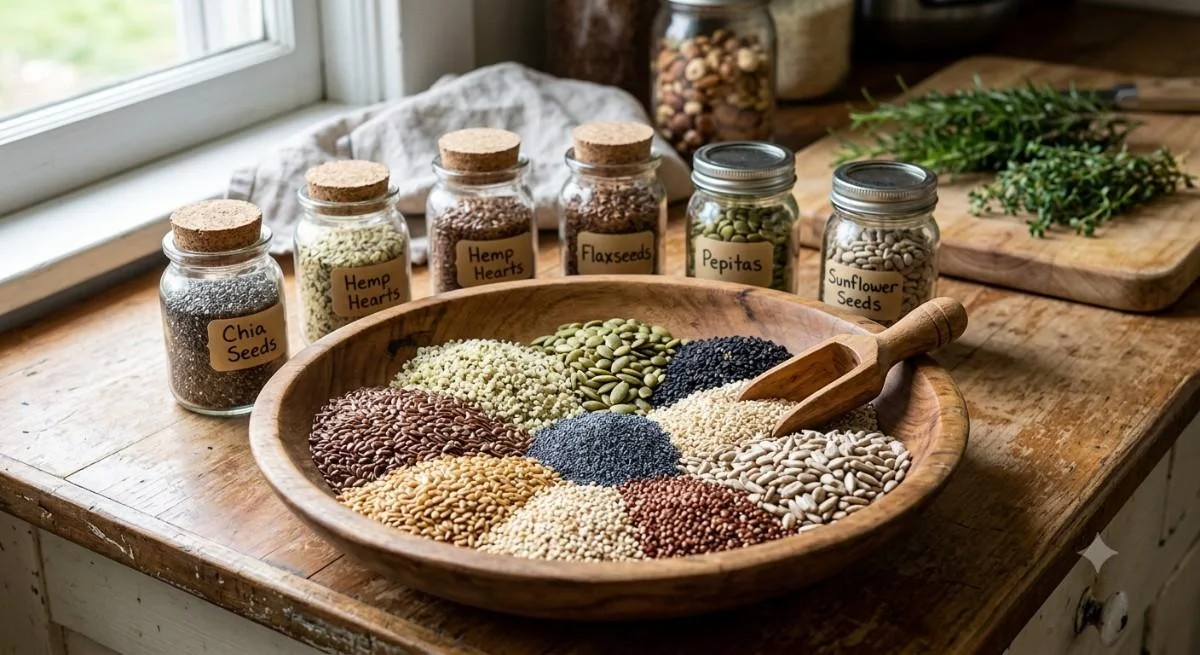
Flax and pumpkin seeds don’t get much credit, but they pull real weight. Flaxseed alone has around 534 kcal, 18.3g protein, and a huge 27g of fibre per 100g (USDA FoodData Central, Flaxseed) — one of the most fibre-dense ingredients in the whole laddu. Seeds also give the laddu its bite — the texture that sets it apart from a smooth, uniform mithai.
Ghee — the fat that holds everything together
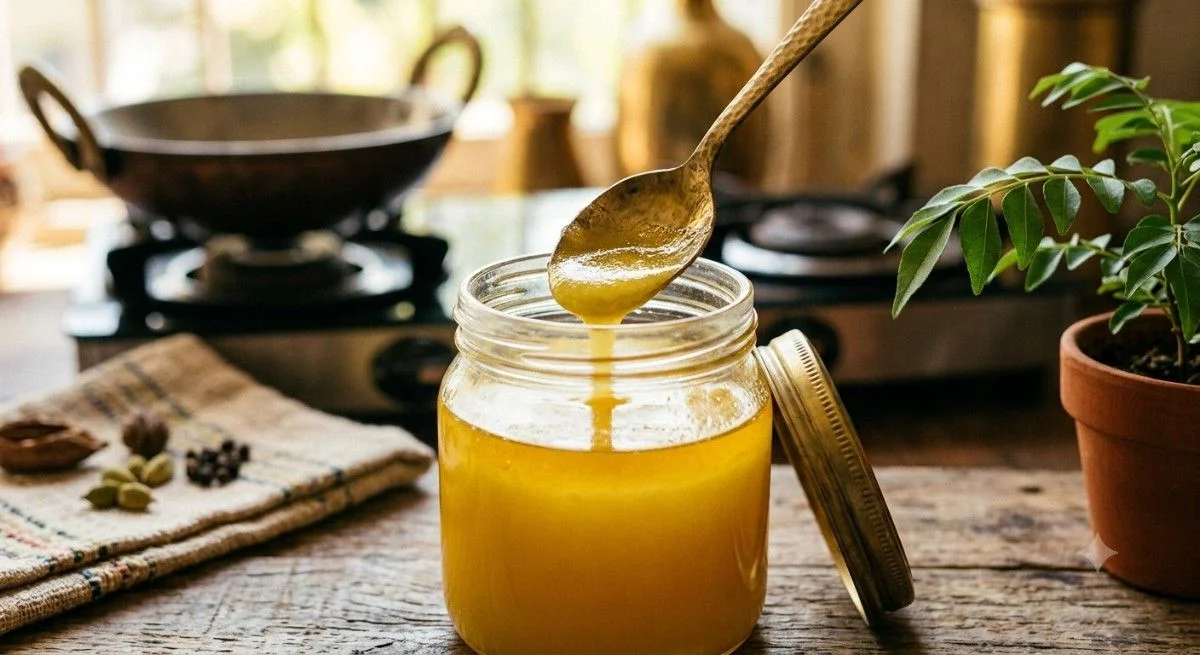
A small amount of ghee helps bind the mix and extends shelf life. Nutritionally, ghee is almost pure fat — about 900 kcal per 100g, with barely any protein or carbs (USDA FoodData Central, Butter, clarified butter (ghee)). Its high smoke point (around 250°C) means it can carry roasted, nutty flavour from the other ingredients without breaking down.
How much ghee is too much?
Simple rule: once ghee starts pooling at the bottom of the mixing bowl instead of getting absorbed, you’ve added more than you need. Too much ghee makes the laddu greasy and actually shortens its shelf appeal instead of extending it.
Gond — optional, but traditional
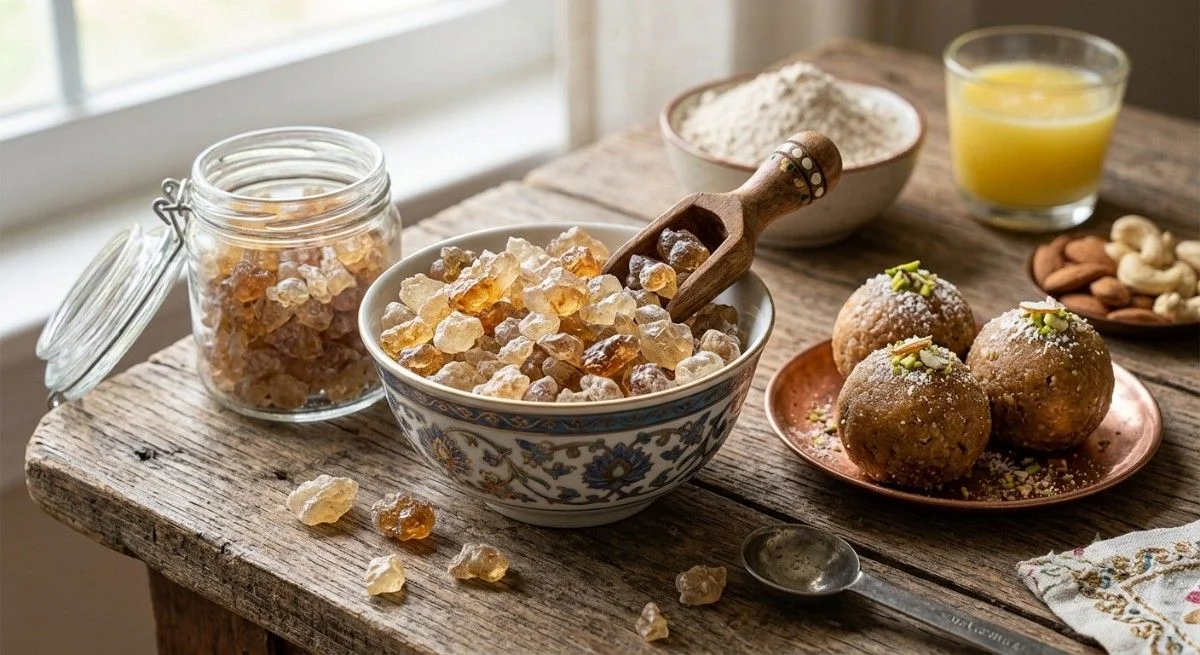
Gond (edible gum from the acacia tree) is fried until it puffs up, adding a light, crunchy texture. It’s a well-known ingredient in Indian postpartum recovery foods — though in an everyday dry fruit laddu, it’s usually added in smaller amounts, mostly for texture and tradition. Its deeper role in postpartum nutrition is covered in a separate dedicated guide.
Spices — cardamom and dry ginger
Small amounts, big flavour impact. Cardamom adds warmth. Dry ginger (saunth) adds a gentle heat that balances the date sweetness and offsets the taste of added whey.
Traditional vs. Protein-Fortified Ingredient Lists
The biggest difference between a traditional laddu and a protein-fortified one isn’t fancy new ingredients — it’s precision. Here’s how the same basic ingredients get rebalanced:
| Ingredient | Traditional Laddu | Protein-Fortified Laddu |
| Binder | Dates or jaggery syrup | Dates only (no jaggery) |
| Protein source | Nuts only | Nuts + whey protein isolate |
| Sweetener | Sugar or jaggery | Dates only — no added sugar |
| Fat | Ghee | Ghee, reduced amount |
| Texture agent | — | Whey adjusts binding; ratios recalculated |
| Extras | Gond, spices | Gond, spices (more cardamom to balance whey) |
Notice what stays the same: dates, nuts, ghee, gond. What changes is the proportion and precision — cutting out jaggery completely, adding a measured amount of protein, and adjusting spice to compensate.
Ingredient Substitutions — What Works and What Doesn’t
Cashews swapped for peanuts: This affects binding, not just flavour. Cashews have more fat, which helps hold the mix together. Peanuts are leaner and can leave the mix drier. If you swap, plan to add a little more ghee to compensate.
Whey swapped for plant protein (pea or soy): Doable, but the texture changes. Plant proteins absorb moisture differently than whey, so you’ll need to re-test the date-paste ratio rather than doing a simple 1:1 swap. Worth knowing if you’re going for a vegan protein laddu — the ingredient list looks similar, but the ratios underneath usually aren’t.
Skipping ghee entirely: Possible, but you lose some binding strength and shelf life. Most dairy-free versions use a smaller amount of neutral plant oil instead, though the flavour changes noticeably.
How to Read a Dry Fruit Laddu Ingredient List Before You Buy
A few quick things to check before trusting a packaged laddu’s health claims:
● Order matters. Ingredients are listed by weight, heaviest first. Dates or nuts should be at the top — not a vague “dry fruit mix.”
● Watch for hidden sugar. Honey, jaggery syrup, or glucose syrup listed alongside dates is a red flag for “natural sweetener” marketing that isn’t fully honest.
● Protein source should be named clearly. Look for “whey protein isolate,” not a vague “protein blend” buried after sugar and glucose syrup.
● Check for fillers. Some mass-market laddus bulk up with puffed rice or refined flour to cut costs — this dilutes both texture and nutrition per piece.
Run any packaged laddu through this checklist — takes under a minute and tells you more than any “high protein” badge on the box. Freak Fit Foodie’s protein laddu range passes every point: dates and nuts lead the ingredient list, the protein source is clearly named as whey protein isolate, and no jaggery or glucose syrup is hiding behind “natural sweetener” wording.
Myth vs Fact — Dry Fruit Laddu Ingredients
Myth: More dry fruits automatically means a healthier laddu.
Fact: Without balancing fat and protein too, more dry fruit usually just means more calories per piece. More isn’t the same as balanced.
Myth: “Sugar-free” on a laddu label means zero sugar.
Fact: Dates are naturally high in sugar. “Sugar-free” usually means no added refined sugar—not zero sugar overall.
Myth: Gond is just a texture ingredient with no real nutritional role.
Fact: Traditionally, gond plays a real role in Indian postpartum recovery foods — a topic worth its own dedicated read.
FAQ
What are the main ingredients in dry fruit laddu?
Dates, nuts (almonds, cashews, walnuts), seeds, ghee, and spices make up the traditional base. Protein-fortified versions also add whey protein isolate or concentrate.
Does dry fruit laddu contain whey protein?
Not always. Traditional versions rely on nuts and seeds for protein. Whey is added specifically in protein-fortified versions to boost the protein count — usually a few extra grams per laddu.
Can you make dry fruit laddu without ghee?
Yes, though it loses some binding strength and shelf life. A small amount of neutral plant oil is a common substitute.
Are dry fruit laddus good for weight loss?
They can fit into a weight-loss routine if portioned correctly, since they’re calorie-dense. Our weight-loss guide covers the exact numbers and timing.
What’s the difference between a regular laddu and a protein laddu, ingredient-wise?
The core ingredients are almost the same. The real difference is precision — a protein laddu adds a measured amount of whey and cuts out added sugar entirely, rather than using new or unusual ingredients.
Bottom Line
A dry fruit laddu isn’t complicated — 6 ingredient categories, each with one job to do. What separates a laddu that actually delivers on its nutrition claims from one that’s mostly marketing isn’t a longer ingredient list — it’s the ratio between them.
Short on time to formulate your own? Freak Fit Foodie’s protein laddu range follows every ratio covered in this guide.
About the Author: Akshi Gothwal is the co-founder of Freak Fit Foodie, where she reformulates traditional snacks into protein-forward snacks — without losing what makes them taste like the original. She writes about the food science behind these recipes: why ratios, not ingredient lists, decide whether a laddu actually delivers on its nutrition claims.
Sources Referenced
● USDA FoodData Central — Dates, Deglet Noor
● USDA FoodData Central — Almonds, raw
● USDA FoodData Central — Cashew nuts, raw
● USDA FoodData Central — Walnuts, English
● USDA FoodData Central — Flaxseed
● USDA FoodData Central — Butter, clarified butter (ghee)
● ICMR-NIN, 2020 — Nutrient Requirements for Indians (RDA & EAR) — recommended dietary allowances for protein in the Indian adult population
● Cleveland Clinic — Whey Protein: Health Benefits and Potential Side Effects — comparative composition of whey protein isolate vs. concentrate