The Ultimate Guide to Healthy Snacking in India
Somewhere between lunch and dinner, willpower quietly checks out. The biscuit tin looks friendlier than it did an hour ago, and the vending machine starts making decisions on your behalf. This is exactly where most snacking advice fails you — it hands over a list of “10 healthy foods” and expects you to remember it at 4 PM when your blood sugar has other plans.
This guide takes a different approach. Instead of one more list, it breaks down what makes healthy Indian snacks genuinely healthy — by time of day, health goal, ingredient, and region — so you can make a good call on the spot, not just when you’ve had time to plan ahead. By the end, the goal isn’t for you to memorise a list of ten approved snacks. It’s for you to look at anything on a shelf, in a tiffin, or on a party table, and know within a few seconds whether it actually holds up.
Jump to a section:
- Snacking Basics: What “Healthy” Actually Means
- Homemade vs Store-Bought: Which One Actually Wins?
- Healthy Indian Snacks for Every Time of Day
- Healthy Indian Snacks by Health Goal
- Healthy Indian Snacks by Diet and Ingredient
- Healthy Snacks Across Indian Regions
- Frequently Asked Questions
Snacking Basics: What “Healthy” Actually Means
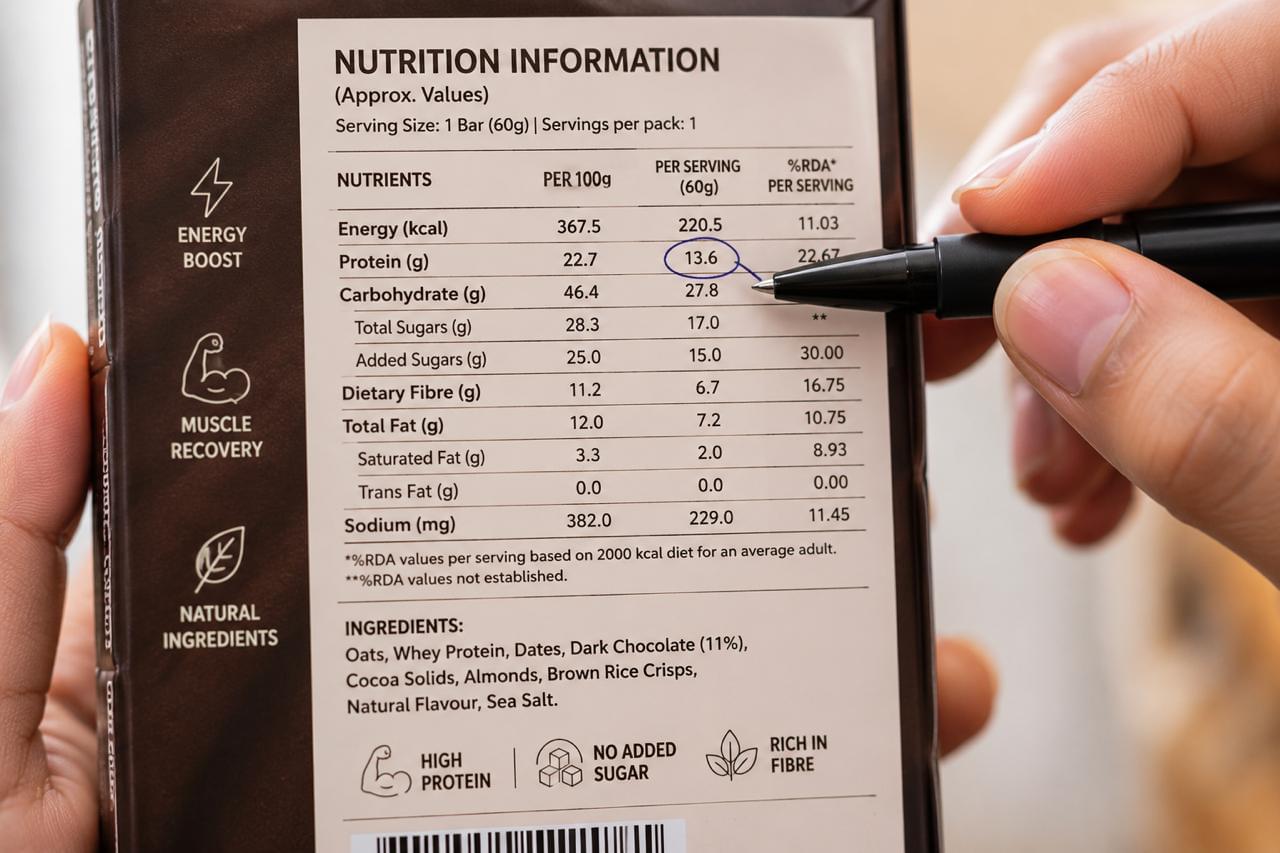
“Healthy” gets printed on packaging the way “new and improved” used to — often true, rarely proven. Before choosing any snack, it helps to know what you’re actually looking at.
Two numbers matter more than the rest. Protein above 5–7g per serving keeps you full; below that, you’re mostly eating flavour. Fibre above 3g per serving slows digestion and steadies blood sugar. Sodium is the quiet troublemaker in Indian snacks — many packaged namkeens cross 300–400mg per serving, and most packs contain more than one serving.
An FSSAI license number on a pack confirms the manufacturer is registered and inspected under food safety law. It says nothing about nutrition — a deep-fried snack and a protein bar can both carry one. Think of it as a hygiene passport, not a health rating.
Serving size is where most of the confusion happens. A pack claiming “150 kcal per serving” sounds reasonable until you notice the pack contains three servings and looks built for one sitting. The same logic applies to sugar — “total sugar” and “added sugar” aren’t the same thing. A fruit-based snack naturally shows some sugar on the label; the real question is how much extra was added on top of that.
It’s also worth clearing up a few things people assume are true but aren’t. Baked isn’t automatically healthier than fried — the calorie gap is often smaller than expected, and a baked snack made from refined flour is still a refined-flour snack. Multigrain doesn’t mean whole grain either; check whether wheat flour appears before “multigrain” in the ingredient list.
Homemade vs Store-Bought: Which One Actually Wins?
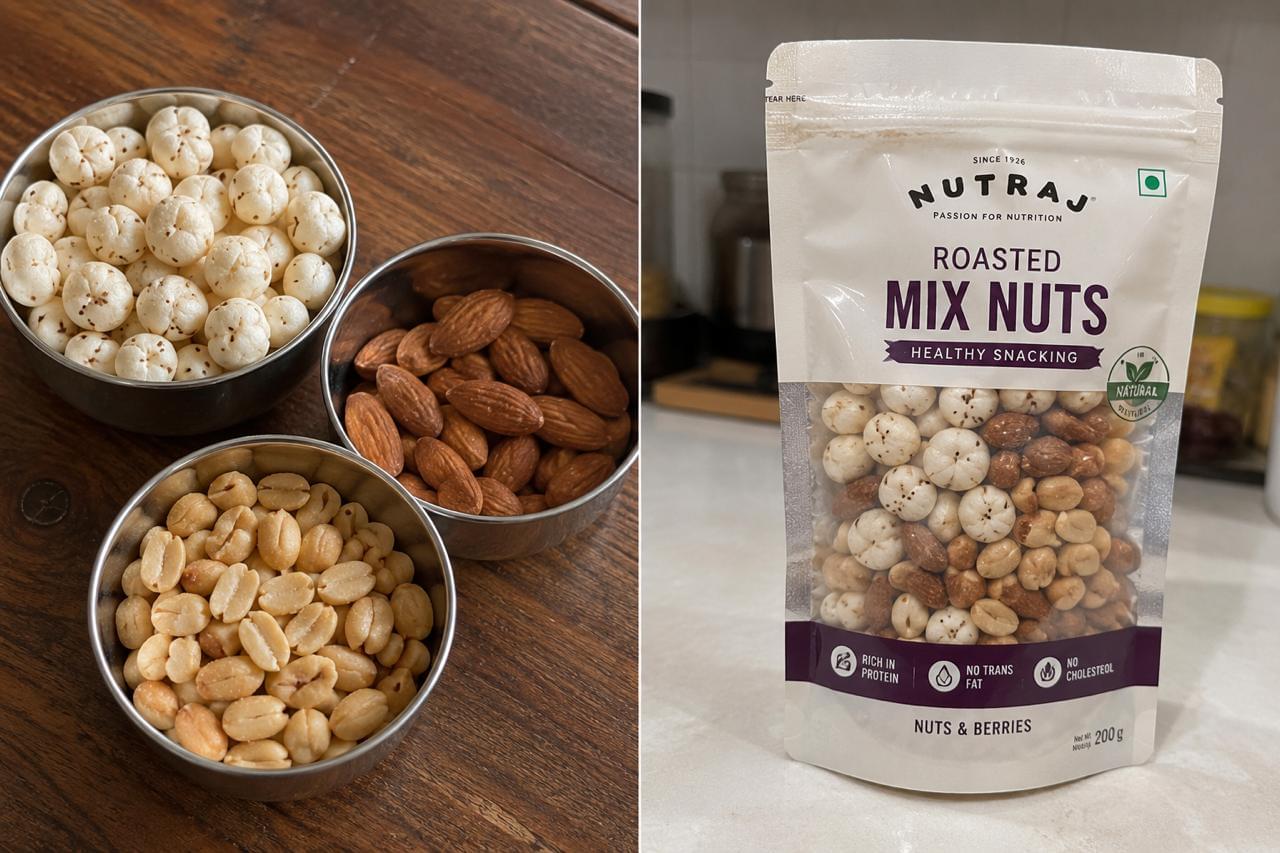
Neither, consistently — and that’s the honest answer, not a cop-out.
Homemade snacks win on ingredient control. You know exactly what went into that roasted chana, because you roasted it. Store-bought wins on convenience and, oddly enough, portion control — a sealed 30g pack is genuinely harder to overeat than a large homemade batch sitting on the kitchen counter.
Cost tends to favour homemade, but only if the ingredients get used before they expire in the back of a cabinet somewhere. The realistic answer is a mix: homemade for your everyday staple, and a well-chosen packaged option for the days when cooking isn’t happening.
Healthy Indian Snacks for Every Time of Day
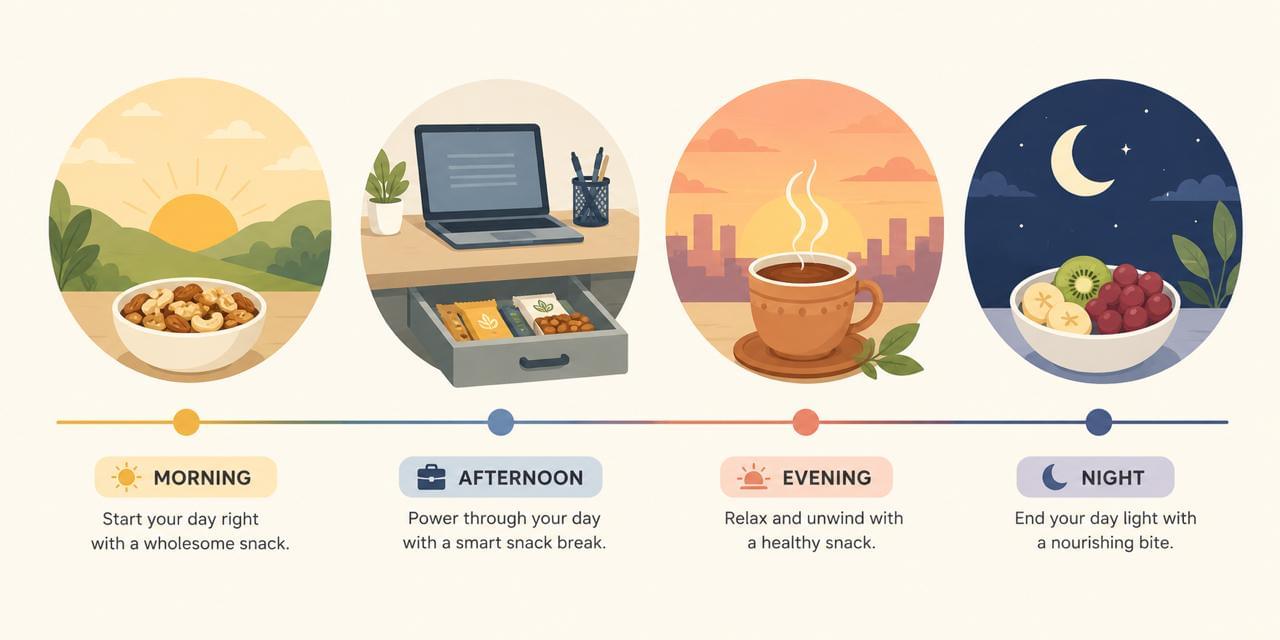
Timing changes what a snack needs to do. A snack eaten out of habit works differently from one eaten because your body genuinely needs fuel.
- Morning – The mid-morning lull calls for protein and a bit of fat — a small handful of roasted chana or nuts with fruit holds most people till lunch.
- Office and midday – Left to chance, this slot gets filled by whatever’s nearest, and the nearest thing is rarely good for you. Keeping healthy snacks for the office stocked in a drawer beats competing with a vending machine that has never once made a good decision on your behalf. The same logic covers healthy workplace snacks in general — the choice usually comes down to whatever’s within arm’s reach at 4 PM, so stocking that reach deliberately does most of the work.
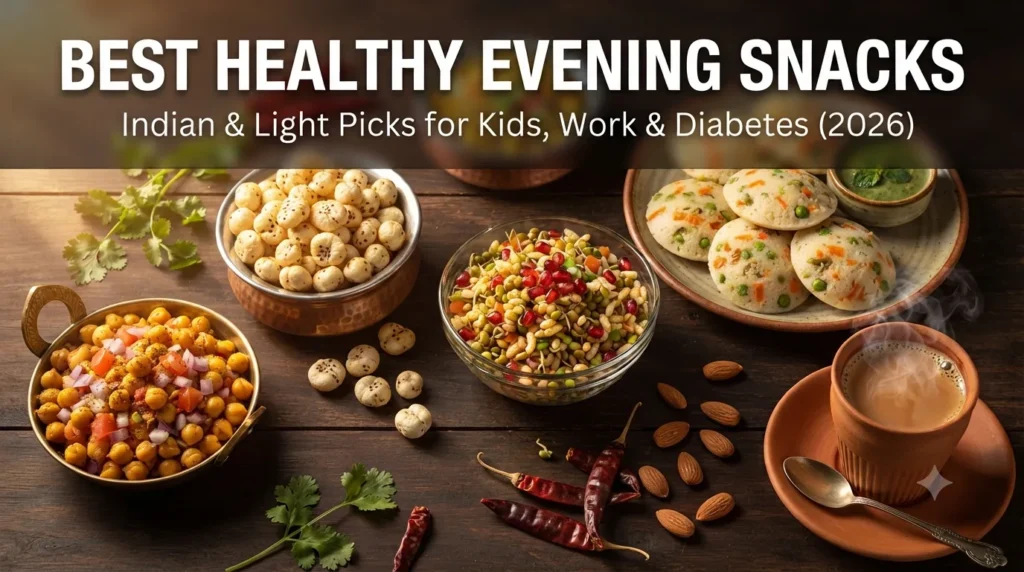
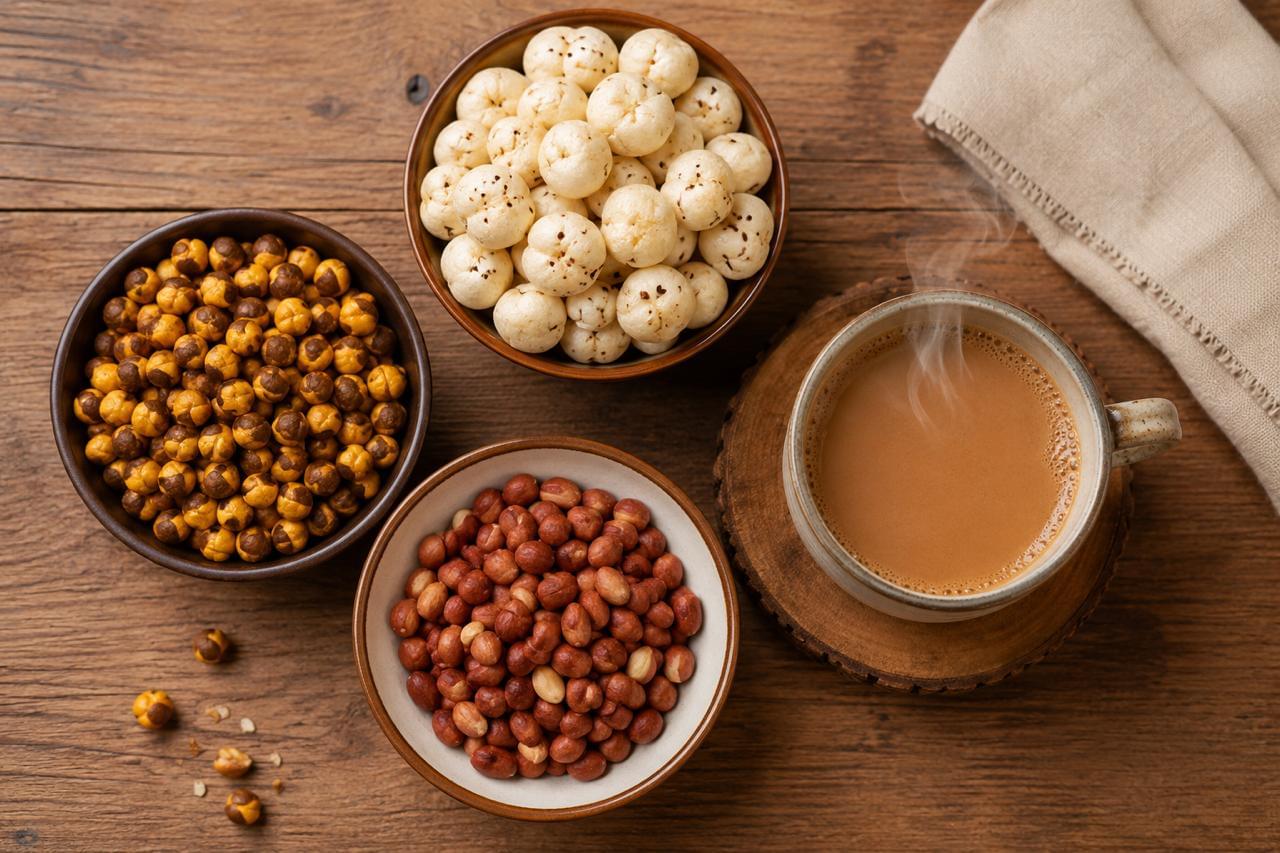
- Evening – This is peak snacking territory in most Indian households, usually alongside chai. A handful of roasted makhana or peanuts delivers the same ritual as fried namkeen, minus the oil slick. Full options for healthy evening snacks — Indian-style — are covered in this time-of-day snacking guide.
- Late night – If hunger is real and not just boredom in front of the TV, a small bowl of curd or a piece of fruit does the job far better than anything fried this close to bedtime.
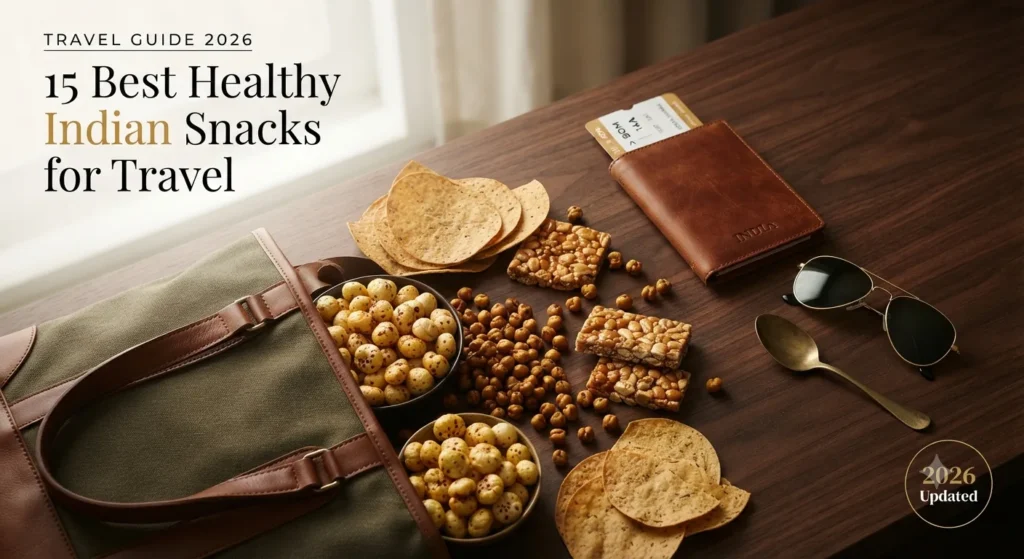
- Travel and parties – Both call for snacks that survive a bag or a buffet table without turning into a mess. Roasted, dry snacks — chana, makhana, trail mixes — travel and serve well precisely because they don’t need refrigeration or last-minute prep, which makes them just as useful for a party spread as for a train journey.
- Gifting – Healthy snack hampers have quietly become a real gifting category, and the same roasted, shelf-stable snacks that work for travel translate well here too — they last longer than sweets and don’t need to be eaten the same day they’re received.
Healthy Indian Snacks by Health Goal
Not every “healthy” snack does the same job. What works for a weight-loss goal can fall short for someone managing diabetes, and what’s fine for a toddler isn’t automatically right during pregnancy. The suggestions below are general food choices, not medical advice — anyone managing a specific health condition should treat this as a starting point for a conversation with their doctor or dietitian, not a replacement for one.
For weight loss
The priority is volume and fullness per calorie — snacks like roasted chana or air-puffed options that fill you up without a heavy calorie load, so the next meal doesn’t turn into overcorrection. Skipping snacks altogether tends to backfire here more often than it helps, since arriving at dinner genuinely ravenous usually leads to eating faster and more than planned.
For diabetics
Added sugar and refined carbs matter more than total calories. Snacks built around protein, fibre, and healthy fats — nuts, roasted seeds, curd — tend to cause a gentler blood sugar response than anything carb-heavy on its own, since fibre and protein both slow how quickly sugar hits the bloodstream. As always, this is general guidance — blood sugar management should stay led by a doctor’s advice, not a snacking guide.
For kids
The snack needs to be genuinely appealing, not just nutritionally correct on paper — think roasted makhana with a light seasoning, homemade granola, or fruit with a nut butter, rather than anything that requires convincing. Texture and shape usually matter more to a child than a nutrition panel ever will, so half the job is presentation.
For pregnancy and breastfeeding
Protein and iron needs go up, which makes snacks like roasted chana, dates with nuts, or dairy-based options more useful than usual. Individual requirements vary a lot during this stage, so a doctor or gynaecologist’s guidance should always take priority over general snacking advice.
For cravings
The smartest move usually isn’t suppression — it’s a swap. A small piece of dark chocolate or a handful of roasted nuts can satisfy the same urge that a packet of chips was aiming to fix, without the same sodium hit.
High protein snacks
Protein deserves its own mention here, since it’s the one factor that shows up across almost every goal above. Research on protein and satiety consistently shows that snacks higher in protein reduce hunger more effectively than carb-heavy alternatives, which is exactly why chana, peanuts, and curd keep reappearing across this list — they’re not trendy, they just work.
Healthy Indian Snacks by Diet and Ingredient
Dietary needs and ingredient preferences narrow the field further, and India’s snack landscape actually has more range here than it gets credit for.
- Gluten-free Indian snacks are easier to find than most people expect — roasted chana, makhana, peanuts, and most rice-based snacks are naturally gluten-free without needing a “free-from” label at all. The trickier part is processed multigrain snacks, where wheat often sneaks back in despite the gluten-free-sounding branding, so the ingredient list still needs a quick check.
- Snacks without oil lean on roasting, air-frying, or steaming instead of deep frying — dry-roasted makhana and chana fall firmly into this category, with barely any fat content to speak of, which also happens to be why they store well without turning stale or rancid as quickly as fried alternatives.
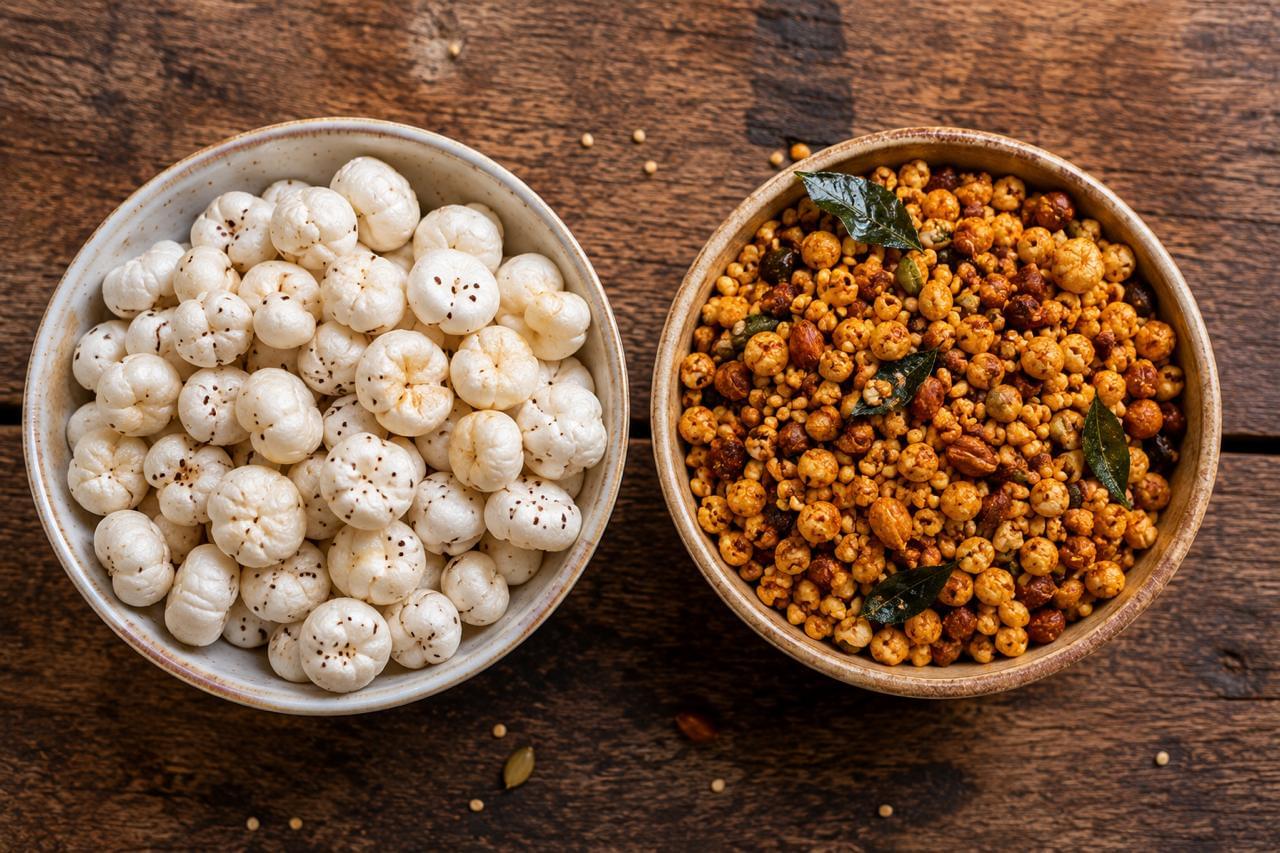
- Makhana, or fox nuts, deserves a specific mention: dry-roasted, it carries close to zero fat while still delivering meaningful fibre, which is an unusual combination for a snack that also happens to taste good.
- Millet-based snacks — think roasted foxtail or bajra options — bring fibre and micronutrients that refined-flour snacks simply don’t have, and India’s renewed interest in millets makes these easier to find on shelves than they were a few years ago.
- Healthy chocolate snacks aren’t a contradiction — dark chocolate with a high cocoa percentage and minimal added sugar can fit into a balanced snacking routine in small portions.
On the ingredient side, palm oil is worth understanding specifically, since it shows up in a huge share of packaged Indian snacks. It’s roughly 50% saturated fat, and saturated fat is consistently linked to raised LDL cholesterol, according to Harvard Health and multiple peer-reviewed reviews on the topic. That’s the actual reason to read labels here, not because the ingredient is trendy to avoid. The full reasoning is laid out in why palm oil matters in packaged snacks.
Healthy Snacks Across Indian Regions
India’s regional snacking traditions already lean healthier than they get credit for — long before “healthy snacking” became a category of its own.
- South Indian snacks — murukku made with rice and lentil flour, roasted or steamed options like idli and dhokla, and dry-roasted spiced lentils — offer genuine variety without defaulting to deep frying for everything.
- Gujarati snacks bring a similarly strong steamed and roasted tradition — dhokla, khakhra, and roasted chana-based mixtures show up constantly, and most of them were built around portion-friendly, shelf-stable ingredients long before that was a marketing angle.
Both regional traditions make a solid case that healthy snacking in India isn’t an import — it’s been sitting in regional kitchens the whole time. Long before “clean eating” became a hashtag, steaming, roasting, and fermenting were already doing the job that modern snack marketing now sells as a discovery.
Frequently Asked Questions
What makes a snack genuinely healthy in the Indian context?
A combination of adequate protein (5–7g+), decent fibre (3g+), and controlled sodium and added sugar — not just a “natural” or “baked” claim on the front of the pack.
Are healthy Indian packed snacks actually reliable?
Some are, provided the nutrition panel backs up the front-of-pack claims. FSSAI registration confirms safety and legal compliance, not nutritional quality, so the label still needs a proper read.
What’s the best high protein Indian snack?
Roasted chana and peanuts remain among the most accessible options — both are inexpensive, need no preparation, and consistently deliver strong protein and fibre per serving based on ICMR-NIN Indian Food Composition Tables data.
Healthy Indian snacks for weight loss?
Forget counting the lowest calories — go for what actually keeps you full. Roasted chana and makhana do that job well, thanks to the protein-fibre combo, so you’re not back at the biscuit tin an hour later or overdoing it at dinner because you skipped snacking altogether.
Is 3 snacks a day good?
Not necessarily better. Two well-chosen snacks usually do more for you than three scattered ones — past a point, it stops being snacking and turns into grazing. A mid-morning one and an evening one, both with some protein and fibre in them, tend to cover the gap just fine. The number matters less than the question behind each snack — are you actually hungry, or just bored?
Is homemade always healthier than store-bought?
Not automatically. Homemade wins on ingredient control, but a well-chosen packaged snack with a clean label and controlled portion size can be just as sensible a choice on a busy day.
About the Author
This guide was written by Aman Choudhary, founder of FreakFitFoodie, based on years of testing snacks and reading nutrition labels for a living — cross-checked against ICMR-NIN and FSSAI data rather than personal opinion alone.
Sources referenced:
ICMR-NIN Indian Food Composition Tables (IFCT) 2017;
Food Safety and Standards Authority of India (FSSAI);
Harvard Health Publishing on saturated fat and cholesterol;
PREDIMED trial and related cardiovascular research on nut consumption;
peer-reviewed research on dietary protein and satiety.
This article shares general nutrition information for educational purposes. It is not a substitute for advice from a qualified doctor or dietitian, particularly for anyone managing diabetes, pregnancy, or another specific health condition.