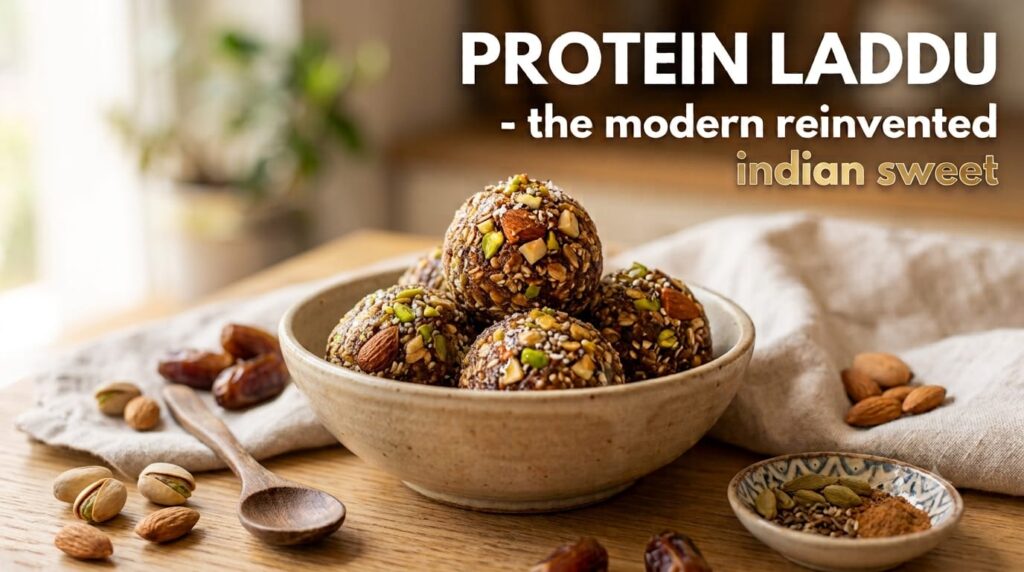
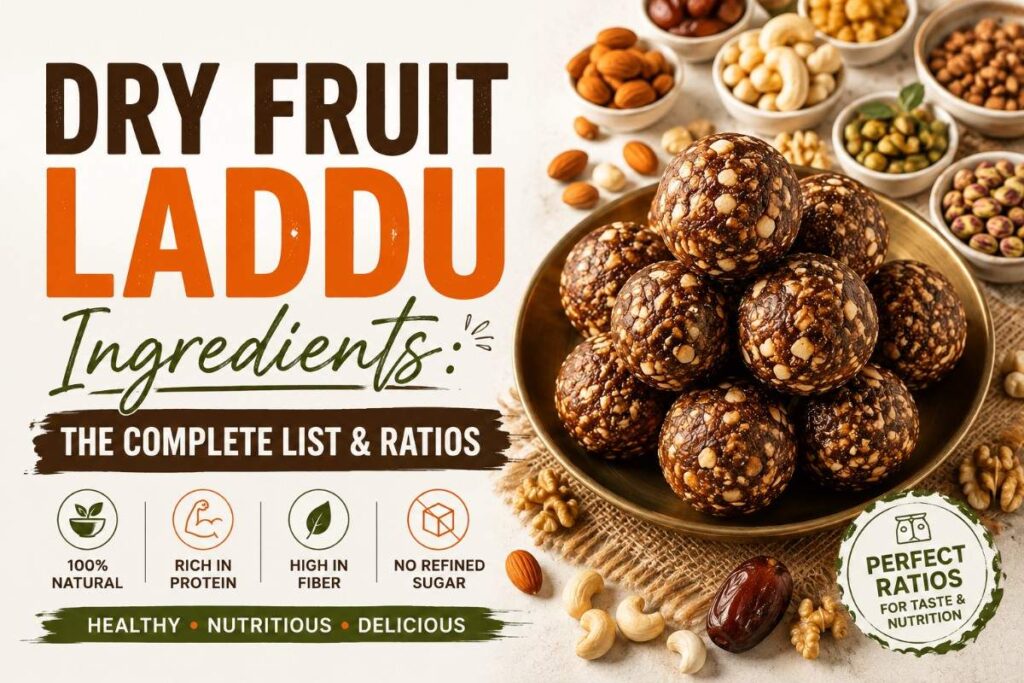
Dry Fruit Laddu for Weight Loss: Benefits & Recipe
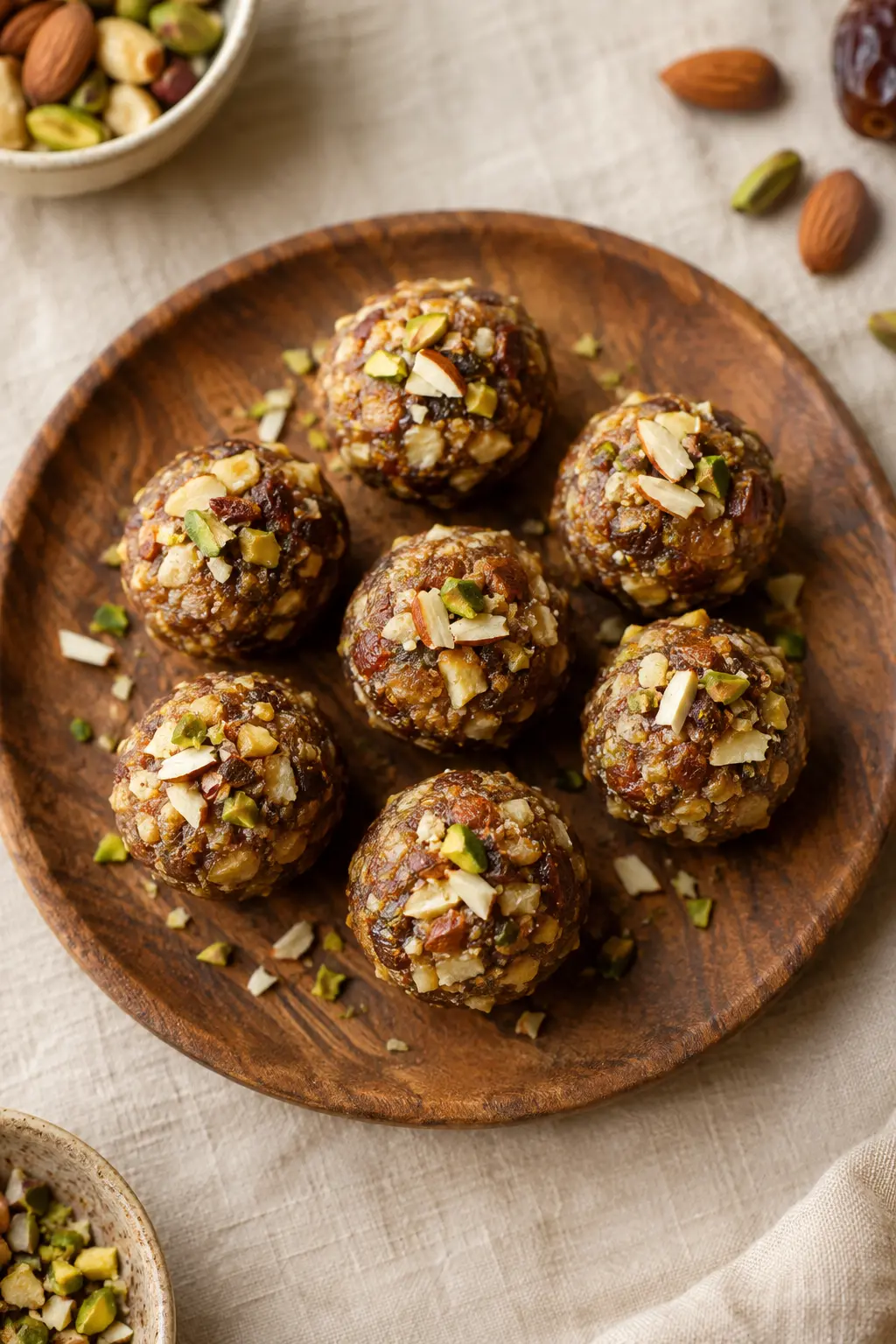
Half the internet calls dry fruit laddu a guilt-free weight-loss snack. The other half calls it a sugar bomb wearing a health-food costume. Both camps are working off the same laddu — they’re just eating different portions of it.
Quick Answer: A dry fruit laddu made mostly of nuts, seeds, and dates — not maida, not refined sugar — can fit a weight-loss diet well, because it trades empty calories for protein and fibre that actually keep you full. But “dry fruit laddu” isn’t a nutrition label; it’s a category, and recipes inside that category swing from 90 calories to 250 calories per piece depending on what’s binding them together. This guide covers the real benefits and hands you a recipe that earns the “healthy” label instead of just wearing it.
What Are the Benefits of Dry Fruit Laddu?
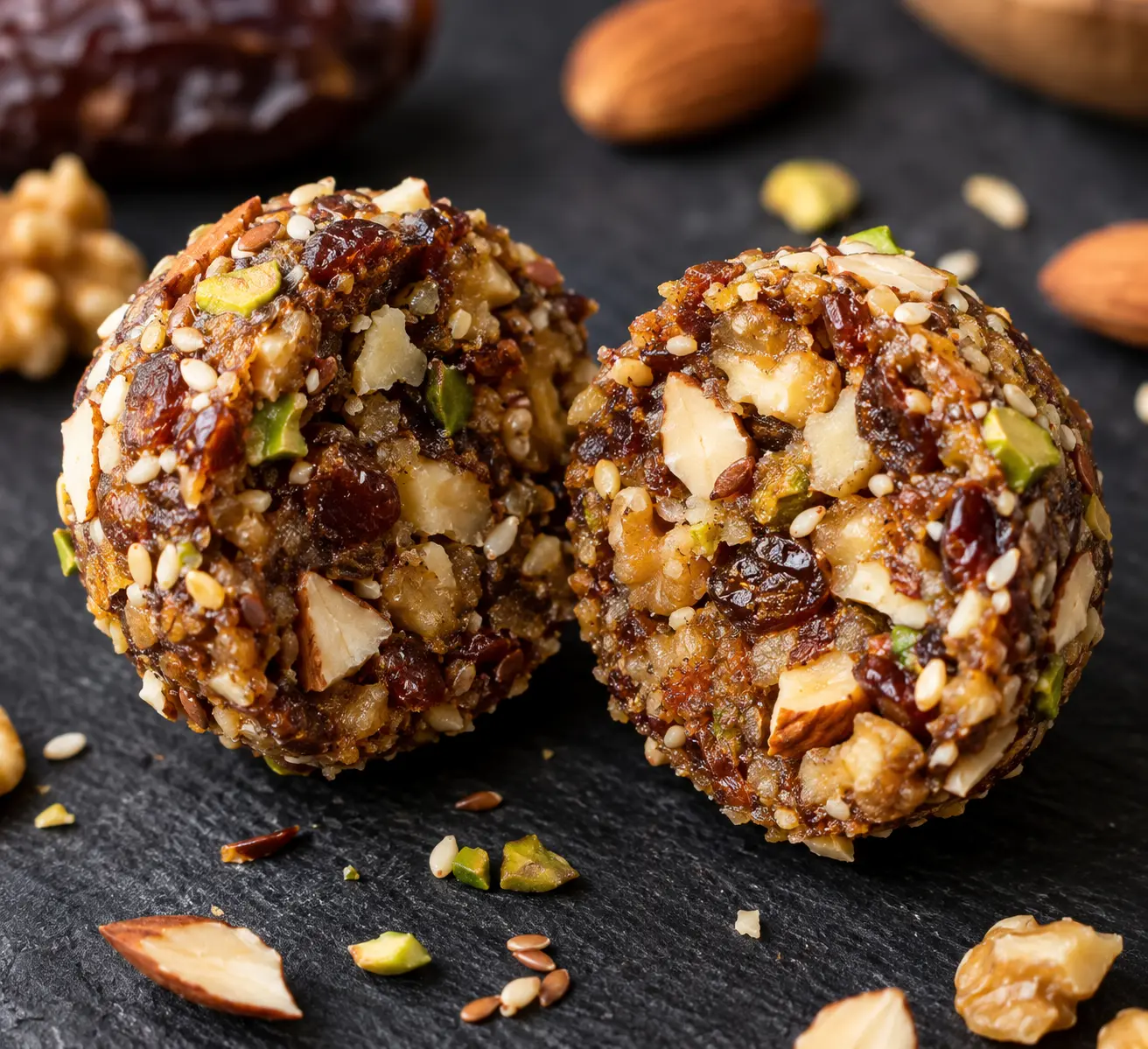
A dry fruit laddu made from nuts, seeds, and dates delivers fibre, unsaturated fat, and micronutrients like magnesium, potassium, and iron in one bite-sized snack. It works by replacing the maida-and-sugar base of a traditional laddu with whole-food ingredients your body digests more slowly. It’s most commonly used as a pre-workout energy snack, a mid-afternoon hunger-curber, or a healthier festive sweet.
- Fibre from dates and seeds slows digestion and blunts the blood-sugar spike you’d get from an equivalent amount of refined sugar.
- Healthy fats from almonds, walnuts, and seeds support heart health — a 100g serving of almonds provides meaningfully high protein and fibre alongside its fat content, a big part of why nuts show up in almost every “good fat” list.
- Micronutrients: dates alone carry roughly 660mg of potassium and meaningful iron, magnesium, and B-vitamins per 100g, on top of their fibre.
- No refined sugar when made correctly — the sweetness comes entirely from dates, which arrive with fibre attached instead of stripped out.
None of this makes the laddu calorie-free. It just means the calories are doing more nutritional work than a besan-and-sugar version would.
How Do You Make a High-Protein, Low-Calorie Dry Fruit Laddu at Home?
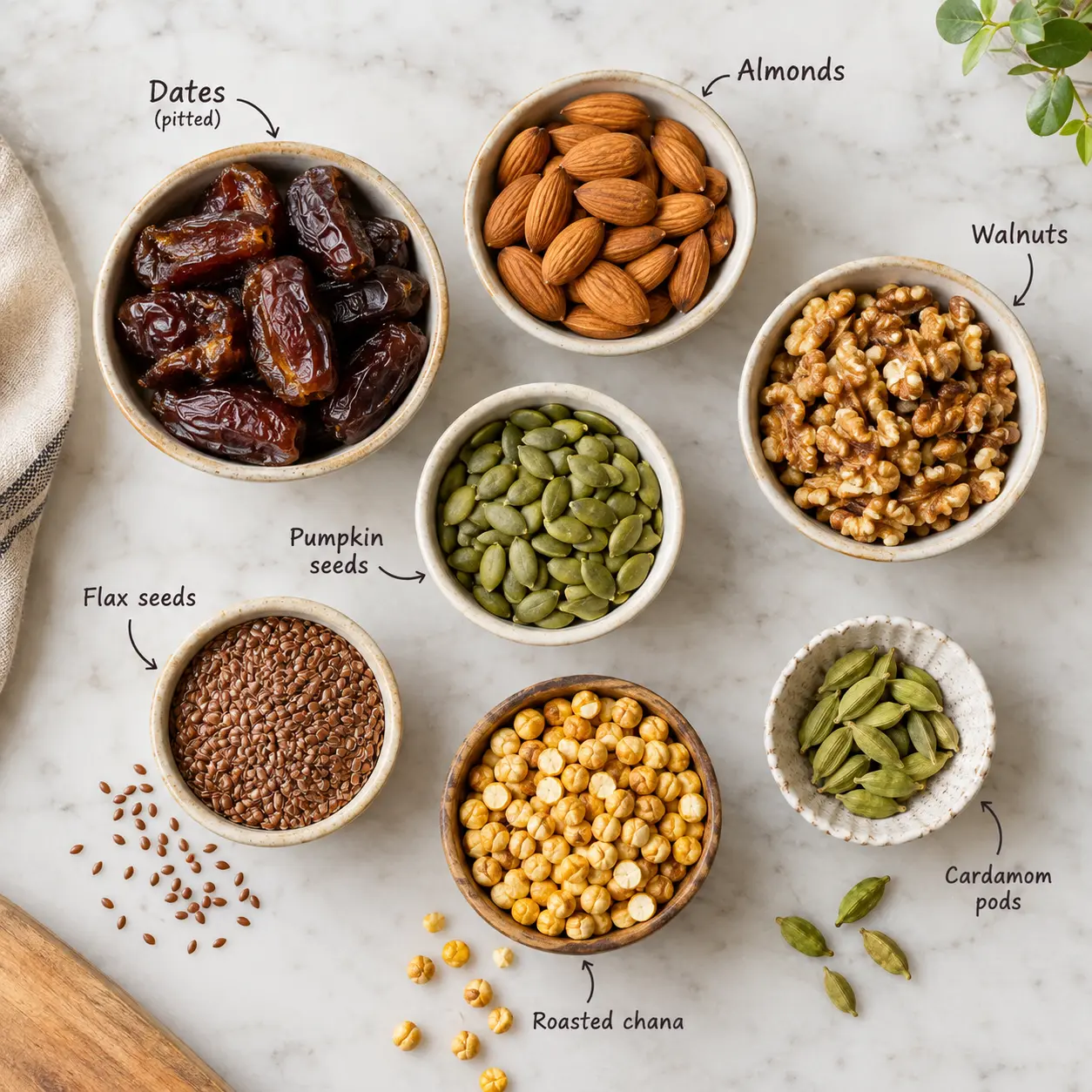
A weight-loss-friendly dry fruit laddu swaps ghee-heavy binding for date paste, adds a protein source like roasted chana or whey, and skips added sugar or jaggery entirely. It works by using dates’ natural stickiness to bind the mixture instead of sugar syrup or excess fat. This version runs lighter than a bakery or sweet-shop laddu while still holding its shape.
Ingredients (makes ~12 laddus, ~25g each):
- 10 Medjool or seedless dates, pitted
- ¼ cup almonds, roughly chopped
- ¼ cup walnuts, roughly chopped
- 2 tbsp pumpkin seeds
- 2 tbsp flax seeds or chia seeds
- 2 tbsp roasted chana (bhuna chana) or 1 scoop unflavored/vanilla whey protein
- ½ tsp cardamom powder
- 1 tsp ghee (just enough to help with shaping, not for bulk)
Method:
- Soak the dates in warm water for 10 minutes if they’re firm, then drain and blend into a rough paste.
- Dry-roast the almonds, walnuts, and pumpkin seeds lightly for 3–4 minutes to deepen the flavour — don’t add extra oil.
- Pulse the roasted nuts and seeds coarsely in a grinder; you want texture, not powder.
- Mix the date paste, nut-seed mix, roasted chana or whey, and cardamom powder with the 1 tsp ghee, kneading until it holds together.
- Roll into 12 equal balls (~25g each) and refrigerate for 30 minutes to firm up.
- Store in an airtight container in the fridge for up to 10 days.
Why this version is lighter: dropping the ghee from a typical ¼ cup down to 1 teaspoon removes roughly 400–450 calories across the whole batch, and skipping jaggery or sugar syrup removes another layer of pure carbohydrate that added nothing but sweetness.
When Is the Best Time to Eat Dry Fruit Laddu for Weight Loss?

The best time to eat a dry fruit laddu for weight loss is 30–45 minutes before a workout, or as a structured mid-morning or mid-afternoon snack — not immediately after a full meal. It works because the natural sugars in dates give fast-access energy for exercise, while eating it as a standalone snack (rather than dessert on top of a full plate) keeps it inside your calorie budget instead of stacking on top of one.
- Pre-workout (30–45 min before): the combination of fast carbs from dates and slow-digesting fat from nuts gives sustained energy without the crash of plain sugar.
- Mid-morning or mid-afternoon snack: this is where it does the most weight-loss work — filling the gap between meals with protein and fibre instead of reaching for chips or biscuits.
- Avoid stacking it right after a full meal. Eating it as “dessert” on top of an already-complete meal just adds calories without the appetite-curbing benefit, since you’re not actually hungry when you eat it.
- Not late at night, in large amounts. Dates’ natural sugar can be fine in the evening in moderation, but eating multiple laddus as a bedtime snack undoes the portion math this whole approach depends on.
What Makes Dry Fruit Laddu Different From a Regular Sugar Laddu?
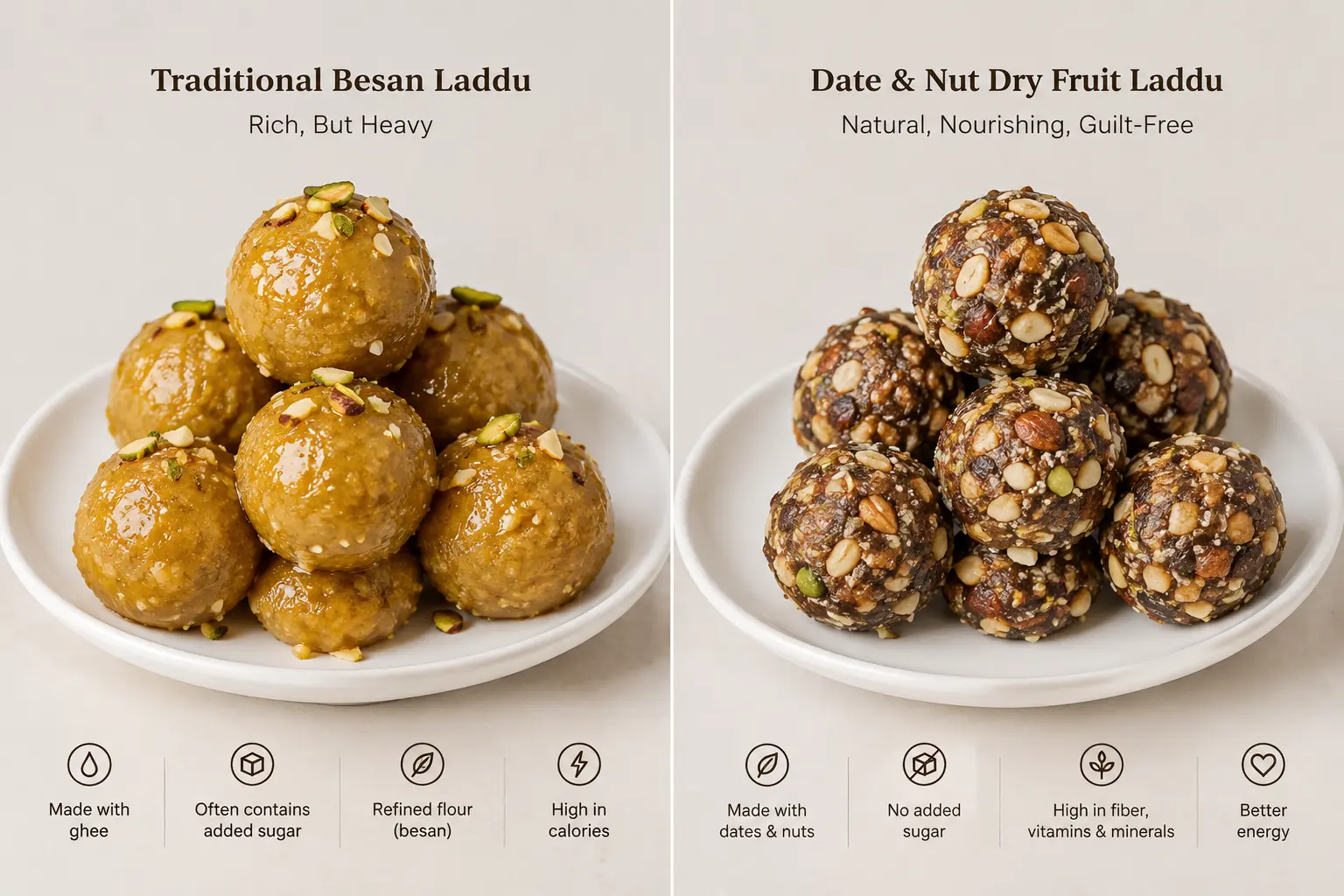
A dry fruit laddu is bound and sweetened by dates and nuts, while a regular sugar laddu (besan, rava, or boondi laddu) is bound by sugar syrup and often deep-fried or cooked in a large volume of ghee. The difference shows up in three places: fibre content, sugar source, and satiety.
| Dry Fruit Laddu (whole-food version) | Regular Sugar Laddu | |
|---|---|---|
| Sweetener | Whole dates (sugar + fiber together) | Refined sugar or sugar syrup |
| Fiber | 3–5g per piece | Under 1g per piece |
| Fat source | Nuts, seeds (unsaturated) | Ghee in large quantity (saturated) |
| Satiety | High — protein + fibre slow digestion | Low — quick sugar spike and crash |
| Typical calories | 100–150 per piece | 150–220 per piece |
The laddu shape and the word “laddu” are the only things they really share. Nutritionally, they belong in different categories.
How Many Calories Are in One Dry Fruit Laddu?
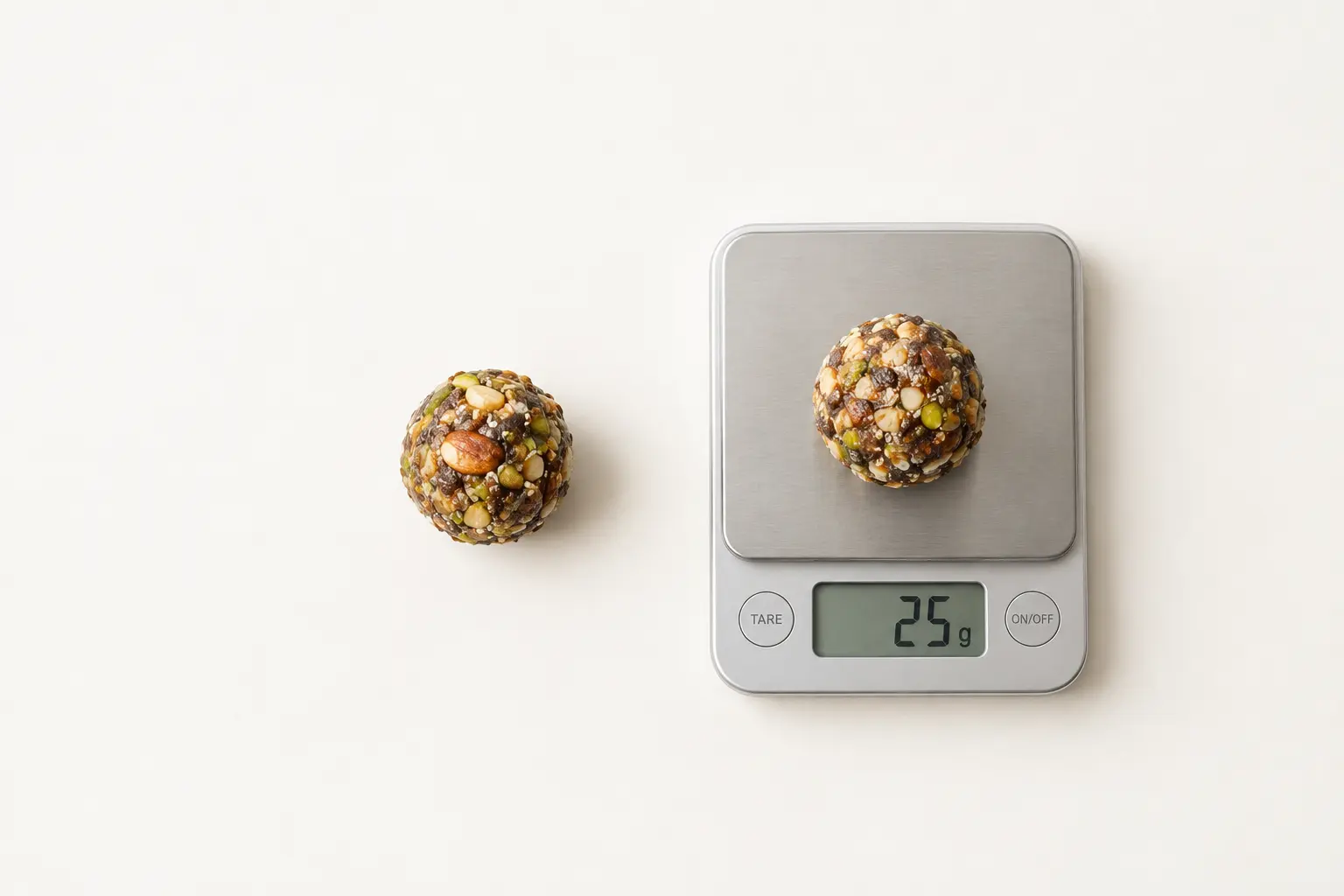
A single dry fruit laddu (roughly 25–35g) typically contains 100–150 calories, depending on how much ghee, sugar, or jaggery the recipe adds on top of the base nuts and dates. Recipes across multiple sources put dry fruit laddu calories in the 100 to 150 range per piece, depending on the quantity of nuts, seeds, and dates used. A version made with a full ¼ cup of ghee and added jaggery can run closer to 180–220 calories, while a lean, chana-or-whey-boosted version like the one above sits nearer 100–120.
For context on where those calories actually come from: 100g of dates alone carries around 282 calories, 8g of fibre, and 63g of total sugar, and 100g of almonds runs in the 570–600+ calorie range with roughly 20g of protein and 12–13g of fibre. A laddu is a small fraction of 100g of each, which is why one piece lands so much lower than those headline numbers suggest.
The practical math: one to two laddus a day (130–260 calories) is a manageable slice of most weight-loss calorie budgets — closer to what you’d spend on a small handful of trail mix, not a dessert course.
Is Dry Fruit Protein Laddu Good for Weight Loss?
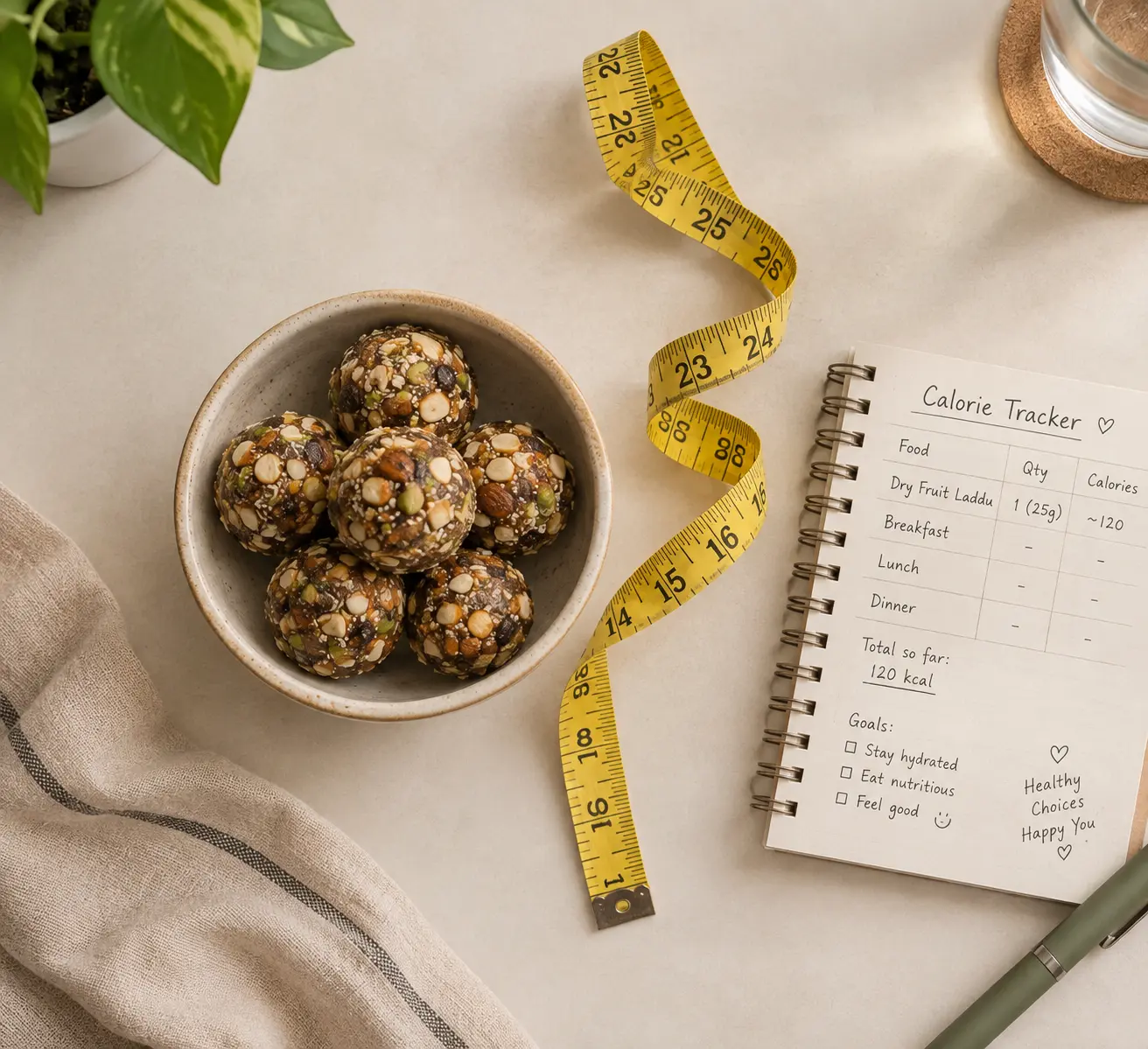
Yes — a protein-rich dry fruit laddu can support weight loss when eaten in the 1–2 piece range, because protein increases satiety more than carbs or fat do, largely through hormones that signal fullness to your brain. It works by triggering a stronger release of the gut hormones GLP-1 and PYY, and a stronger suppression of ghrelin (the hormone that drives hunger), compared to a low-protein snack of the same calorie count.
This isn’t a fringe claim. A randomised crossover study found that a high-protein breakfast raised PYY and GLP-1 levels significantly higher than an equivalent high-carbohydrate or high-fat breakfast. A separate dose-response trial found the effect scales with how much protein is in the meal: increasing protein from 14% to 50% of a meal’s energy produced a 20% greater GLP-1 response, a 14% greater PYY response, and measurably lower hunger and higher fullness ratings.
What that means for a laddu in practice: the version with roasted chana or a scoop of whey isn’t a gimmick — that added protein is doing real, measurable work on your hunger signalling, not just adding a marketing label.
Where the myth breaks down: “high protein” doesn’t cancel out calories. Five laddus at 130 calories each is still 650 calories, whatever the protein content. The benefit is in portioning two laddus over a bag of chips, not eating without limit because the label says “protein.”
What Should You Pair Dry Fruit Laddu With?
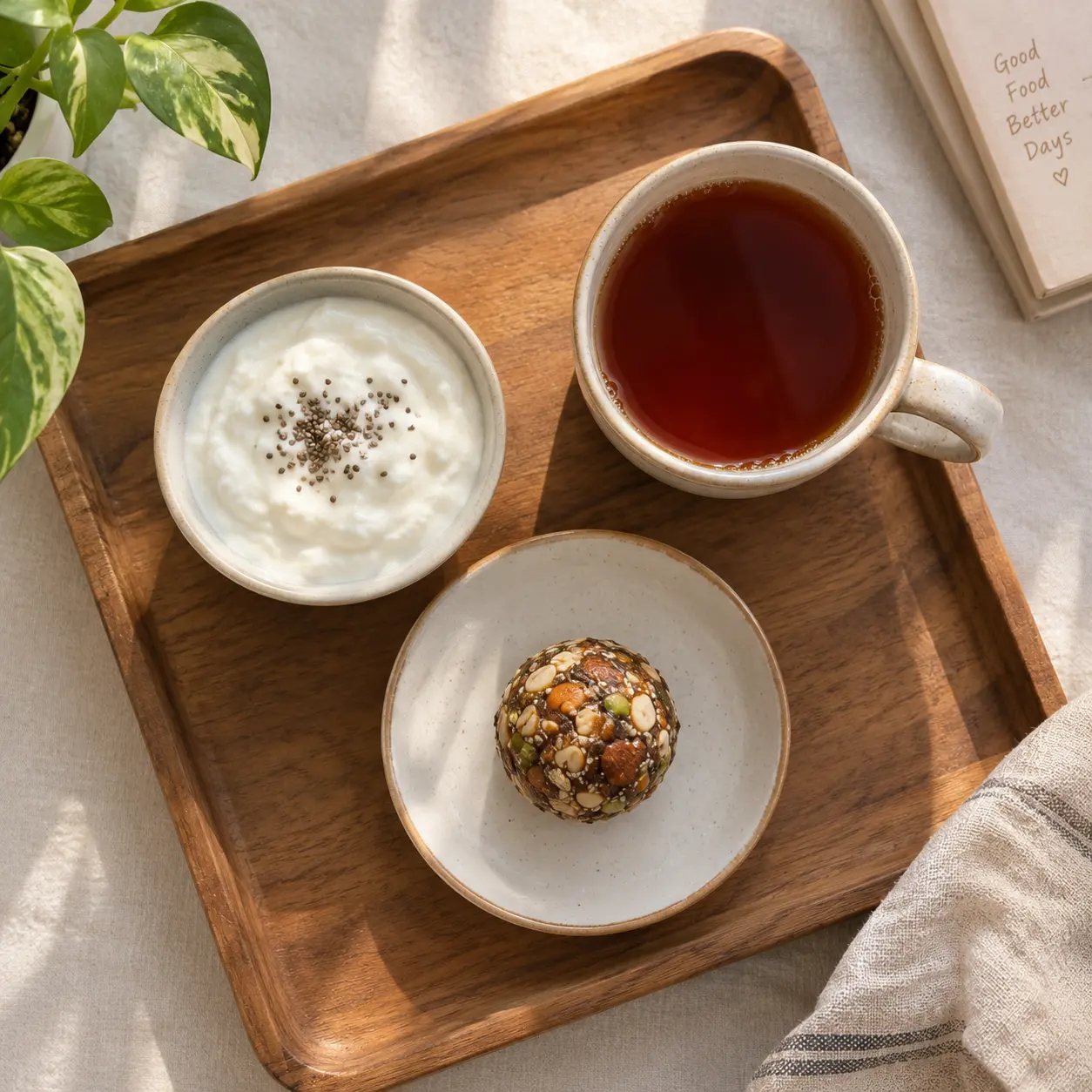
Pairing shifts a laddu from “sweet treat” to “balanced snack” by slowing digestion further and rounding out the nutrients it’s missing on its own.
Avoid pairing with more sweets — a laddu alongside a cup of sweetened chai or a second dessert defeats the portion math the whole approach relies on.
Unsweetened Greek yoghurt or curd — adds a complete protein source and probiotics; crumble a laddu over a small bowl.
Black or green tea (unsweetened) — the natural sweetness of the laddu means you don’t need sugar in the tea, and this is a common pre-workout pairing.
A glass of water 10–15 minutes before eating it — dates are naturally high in fibre, and water helps that fibre do its job instead of sitting heavy.
How Do You Read a Protein-Rich Laddu Label Before You Buy?
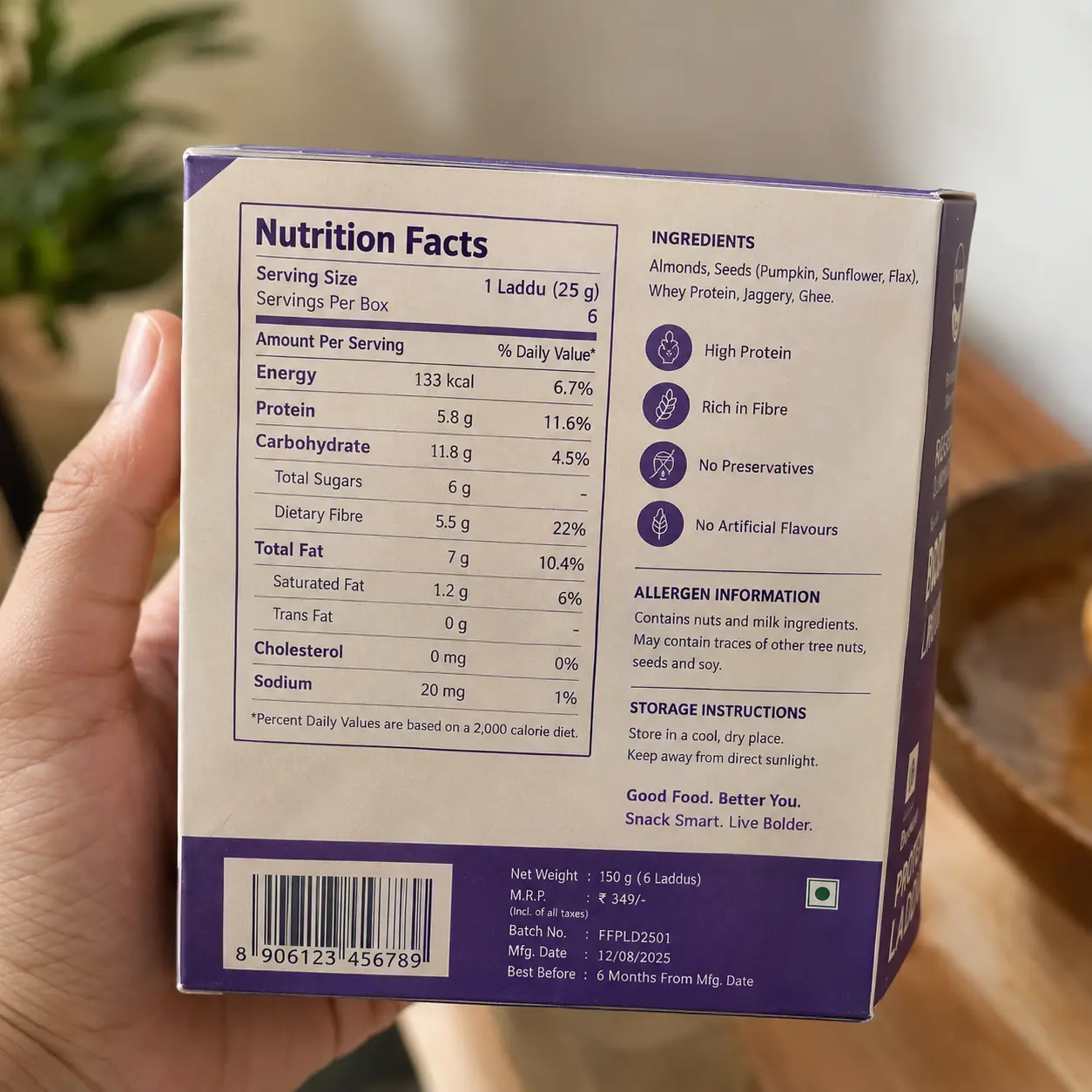
If you’re buying a “healthy” or “protein” laddu instead of making one, the label is where the marketing claim either holds up or falls apart.
- Check the ingredient list order first. Ingredients are listed by weight — if sugar, jaggery, or “invert sugar syrup” appears in the first three ingredients, the “no added sugar” claim on the front of the pack is doing a lot of lifting.
- Look at protein per piece, not per 100g. A pack claiming “high protein” per 100g can still deliver under 3g in a single 25g laddu — check the actual per-serving number.
- Check added sugar separately from total sugar. Total sugar includes the natural sugar from dates; added sugar is what’s been poured in on top. A genuinely low-sugar laddu should show 0g or close to it under “added sugars.”
- Compare calories per piece against the 100–150 range above. A laddu claiming to be “diet-friendly” at 220+ calories a piece is priced more like dessert than snack, regardless of what’s on the front label.
- Scan for hydrogenated fats or palm oil substitutes for ghee — these extend shelf life but strip out the unsaturated-fat benefit that makes nut-based laddus worth eating in the first place.
FAQs
Is dry fruit laddu good for weight loss?
Yes, in moderation — one to two pieces a day, made mostly from dates, nuts, and seeds without added sugar, fits comfortably into most weight-loss calorie budgets and adds protein and fibre that plain sugary snacks don’t.
How many dry fruit laddus can I eat in a day while losing weight?
Most people can fit one to two laddus (roughly 130–260 calories total) into a daily deficit. Active individuals training regularly have a bit more room; largely sedentary days call for sticking to one.
Can diabetics eat dry fruit laddu?
Dates are naturally high in sugar, so portion size matters even though the fibre slows absorption somewhat. Diabetics should treat it as a controlled carbohydrate portion and check with their doctor or dietitian rather than assuming “no added sugar” means “safe in any amount.”
Does dry fruit laddu have more calories than a regular sweet?
Not necessarily — a lean, homemade dry fruit laddu (100–150 calories) often has fewer calories than a syrup-soaked sweet like gulab jamun or a ghee-heavy besan laddu, while delivering more fiber and protein per calorie.
Can I eat dry fruit laddu at night?
In small amounts, occasionally, it’s fine. But eating it as a nightly habit close to bedtime adds sugar and calories at a time when you’re least active, so it’s better positioned as a daytime or pre-workout snack.
How long does homemade dry fruit laddu last?
Stored in an airtight container in the refrigerator, a date-and-nut laddu without preservatives typically stays fresh for 7–10 days.
The Bottom Line
A dry fruit laddu made from dates, nuts, and seeds is a genuinely useful weight-loss snack when the portion stays honest, and the protein is real, not just marketing. One to two a day, made without added sugar, and timed before a workout or between meals rather than as dessert on a full stomach, is where the math actually works.
The laddu was never the problem. Ghee-heavy recipes and vague “high protein” labels were. Fix the portion and the ingredient list, and this old-school snack earns a real place in a modern weight-loss routine.
For more protein-forward Indian snacks like this one, check out Freak Fit Foodie.
About the author: Aman Choudhary is the founder of Freak Fit Foodie, where he writes about protein-forward Indian snacks and the science behind them.
Sources Referenced
- USDA FoodData Central — per-100g nutrition figures for dates and almonds used in the calorie and recipe sections.
- My Pahadi Dukan — reference range for typical dry fruit laddu calories per piece (100–150 kcal).
- Obesity (Silver Spring), 2013 — High protein intake stimulates postprandial GLP-1 and PYY release — source for the protein-breakfast satiety comparison.
- Dose-response protein trial (NCT01561235, University of Copenhagen) — source for the 14%–50% protein / GLP-1 & PYY scaling data.
Figures are approximate and will vary slightly by brand or variety.