Protein Laddu | The indian Sweet Reinvented for Fitness
Quick answer
A protein laddu is a traditional Indian sweet rebuilt around protein-rich ingredients — peanuts, besan, oats, and dates — instead of just sugar and ghee. It keeps the taste of a regular laddu while adding real nutrition. This guide covers ingredients, nutrition, and how it compares to a classic laddu.
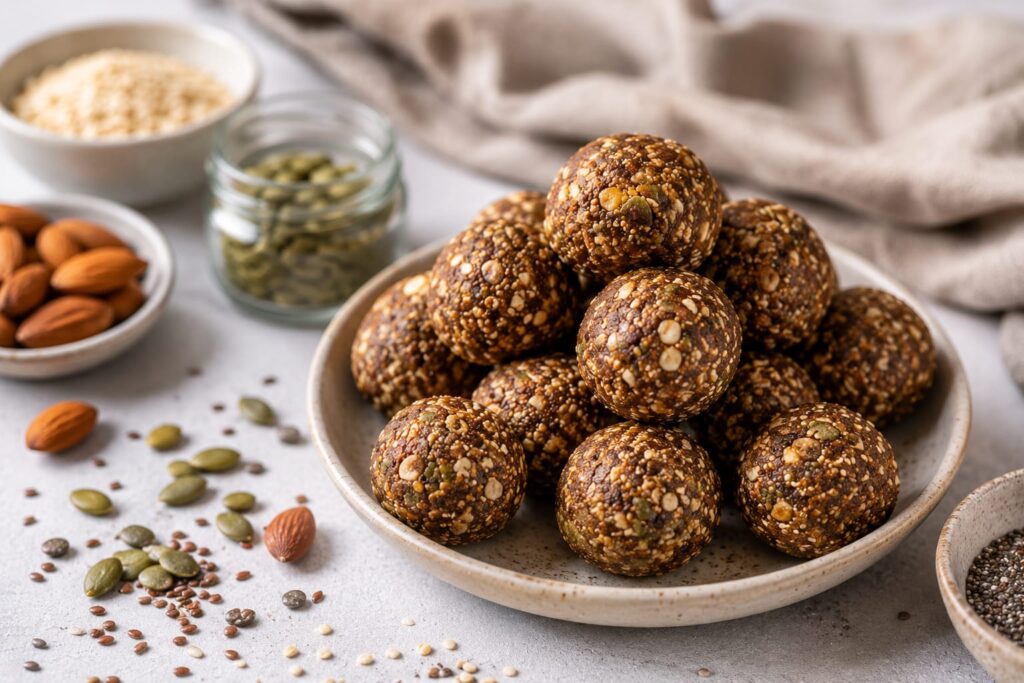
Your grandmother’s laddu never had to justify its existence. It just sat on a steel plate, dripping ghee, and nobody asked it for a nutrition label.
Fast forward to today. Gym bags now carry protein bars, shaker bottles, and — somewhat unexpectedly — laddus. The protein laddu has quietly become one of India’s favourite fitness snacks, and it’s earning that spot honestly.
This article breaks down what a protein laddu actually is, what makes it different from a regular laddu sweet, and whether it deserves the hype. No fluff, no invented numbers — just facts you can check.
What Is a Protein Laddu?
A protein laddu is a traditional ladoo built around protein-rich ingredients instead of just sugar, refined flour, and ghee. Think roasted peanuts, almonds, chickpea flour (besan), oats, dates, and sometimes a spoon of whey or plant protein powder, all rolled into the same round shape your family has made for generations.
The concept is simple: keep the taste and comfort of a healthy ladoo, but shift the macros so it supports muscle repair and satiety instead of just satisfying a sugar craving.
It’s not a new invention dressed up as tradition. Peanut chikki, til laddu and gond laddu have used protein-dense nuts and seeds for centuries. Modern protein laddus simply formalise that logic with better ratios and less added sugar.
Why India Needed This Sweet Upgrade
Here’s the part most people get wrong: they assume Indian diets are protein-rich because dal and roti show up at every meal. The data says otherwise.
According to the ICMR-NIN 2020 guidelines, the recommended protein intake for a healthy adult is 0.83 grams per kilogram of body weight per day. A 60 kg adult needs roughly 50 grams of protein daily, and someone who exercises regularly may need 1.0 to 1.6 grams per kg. Yet national dietary data shows urban Indian adults consume closer to 55 grams a day on average, often from cereal-heavy sources rather than high-quality protein.
Translation: most of us aren’t eating too little food. We’re eating the wrong balance of it. A bowl of thin dal has around 8 grams of protein, not the 20 grams people casually assume.
This is exactly the gap a high protein laddu tries to fill — a small, tasty, portable way to nudge your daily protein number up without turning every meal into a chicken-breast negotiation.
What Actually Goes Into a High Protein Laddu
The ingredients matter more than the marketing. Here’s what typically goes into a solid recipe, based on USDA FoodData Central values:
- Peanuts — about 25.8 grams of protein per 100 grams, plus a full set of essential amino acids. Peanuts are technically legumes, not tree nuts, which is why they punch above their weight on protein.
- Chickpea flour (besan) — around 22.4 grams of protein per 100 grams, making it one of the better plant-based flours available in an Indian kitchen.
- Almonds and other nuts — solid protein contributors that also bring healthy fats and fibre to the mix.
- Dates — low in protein but useful as a natural binder and sweetener, replacing part of the added sugar.
- Jaggery or honey — used in small amounts for flavour, not as the main sweetener.
- Whey or plant protein powder — optional, used by some brands to push the protein count higher per piece.
None of these ingredients are exotic. That’s the point. A protein laddu isn’t a lab-made supplement; it’s a smarter arrangement of things already sitting in most Indian pantries.
Protein Laddu vs Regular Laddu Sweet: What Changes
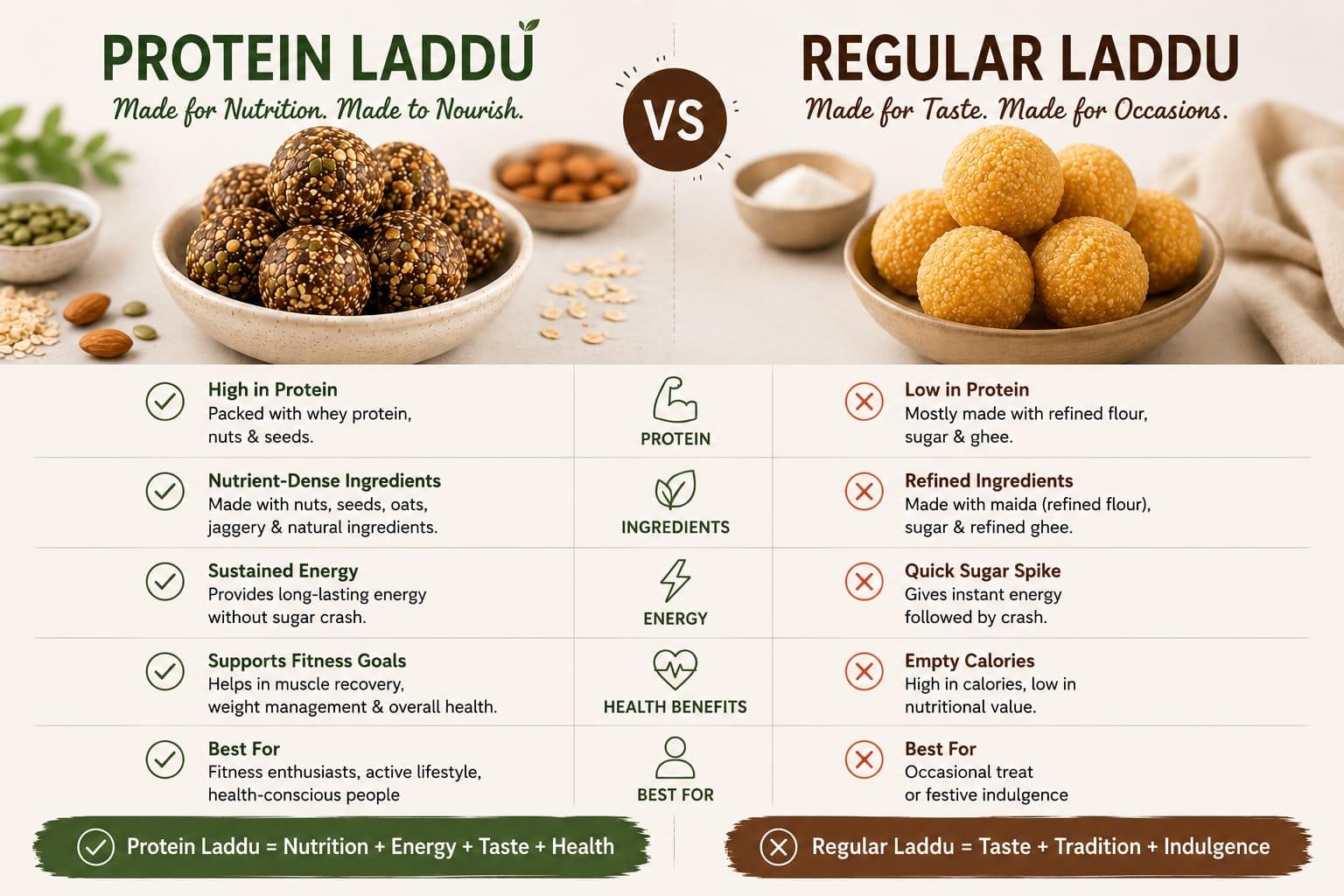
A traditional laddu sweet leans heavily on refined sugar, maida, or besan cooked in generous ghee, with protein as an accidental side effect rather than the goal.
A protein laddu flips the priority. Protein-dense nuts and legume flours form the base, sugar is reduced or replaced with dates and jaggery, and portion sizes are usually smaller and more consistent.
The taste difference is smaller than people expect. Most protein laddus still taste like laddus — slightly nutty, slightly less sweet, and noticeably more filling. Nobody is pretending it’s a protein shake in disguise.
Are Protein Laddus Actually Healthy? Jaggery vs Dates, Compared
Short answer: yes, when the sweetener is chosen carefully. The two most common sweeteners in a protein laddu — jaggery and dates — behave very differently in the body, and that difference matters more than most recipes let on.
Jaggery
brings real mineral value to the table. Unlike refined sugar, it retains iron (~11 mg), calcium (~80 mg), and potassium (over 1,000 mg) per 100 grams — nutrients that refining strips out of white sugar. But jaggery’s glycemic index sits around 84, which is higher than white sugar’s roughly 65. That’s a common misconception worth correcting: jaggery is more nutritious than sugar, but it isn’t automatically gentler on blood sugar.
Dates
work the opposite way. Their glycemic index typically falls in the 40–55 range — roughly half of jaggery’s — because their natural fiber slows how fast sugar hits the bloodstream. That fiber buffer is the mechanical reason dates don’t spike blood sugar the way jaggery or refined sugar can, even though both are technically “natural” sweeteners.
Jaggery vs Dates: Quick Comparison
| Jaggery | Dates | |
| Glycemic Index | ~84 (high) | ~40–55 (low–moderate) |
| Key nutrients | Iron, calcium, potassium | Fiber, potassium, antioxidants |
| Blood sugar impact | Faster spike | Slower, buffered release |
| Best for | Flavour, mineral boost | Binding + gentler sweetness |
What this means for your protein laddu: a recipe leaning mainly on dates will generally be easier on blood sugar than one leaning mainly on jaggery — even if the total sugar grams look similar on a label. If you’re managing diabetes or insulin resistance, this is the detail worth checking before the sugar total: which sweetener is doing most of the work.
Bottom line: a protein laddu beats a regular laddu sweet on nutrition, but “healthy” still has a ceiling. Two laddus don’t offset a poor diet, and they’re not a meal replacement — they’re a smarter snack, not a loophole.
How to Fit a Protein Laddu Into Your Day
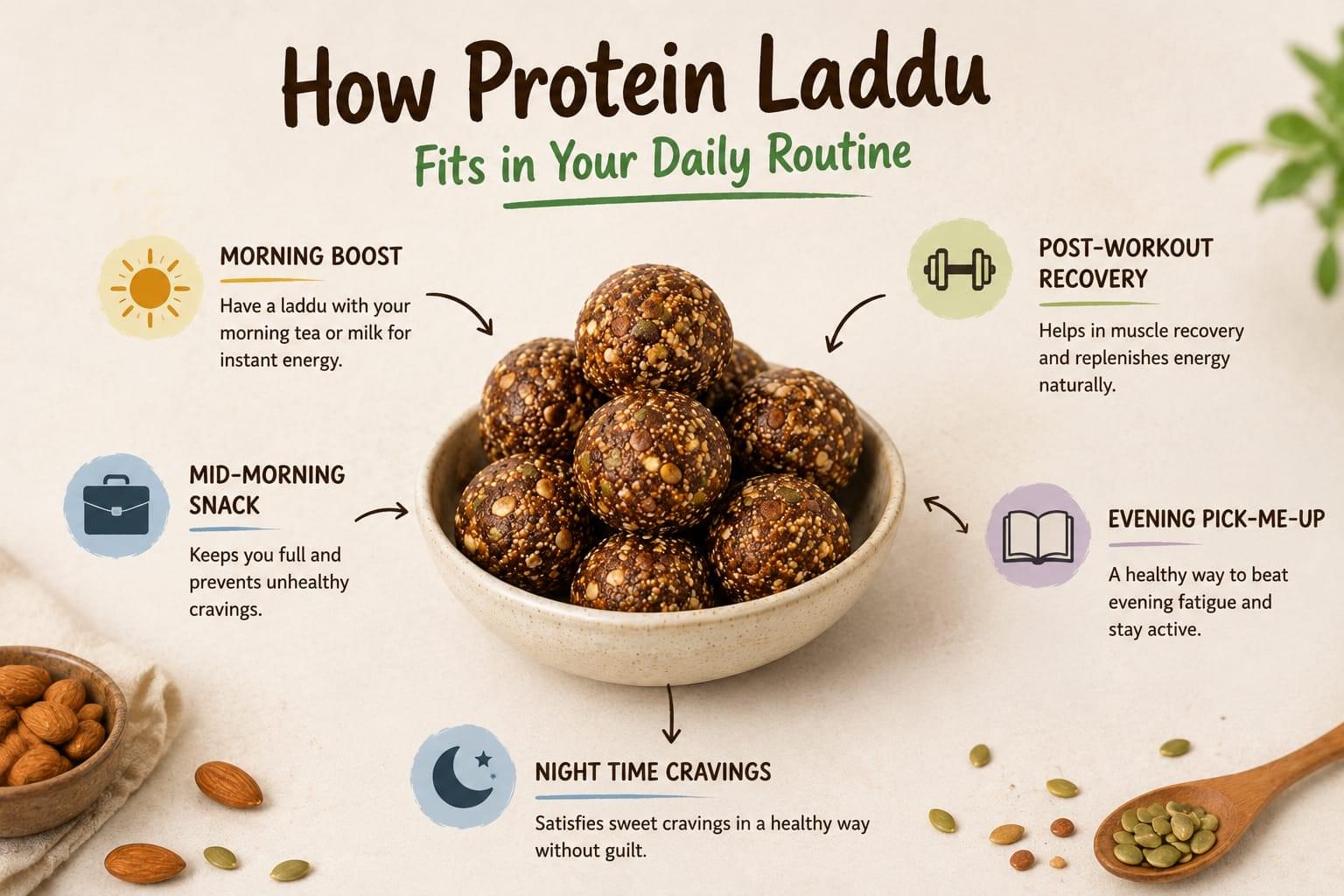
Timing decides whether this snack works for you or works against you.
- Post-workout: A protein laddu pairs well with recovery, especially for people who train in the evening and don’t feel like cooking a full meal afterward.
- Mid-morning or evening snack: It fills the gap between meals better than biscuits or namkeen, thanks to the combination of protein, fibre, and fat that slows digestion.
- Not as a meal replacement: One or two laddus won’t cover your protein target for the day. Pair them with dal, paneer, eggs, or curd rather than expecting them to do all the work alone.
A reasonable portion is one to two pieces a day for most active adults, adjusted based on overall calorie needs and how the rest of the day’s meals look.
Things Worth Watching Before You Buy or Make Them
A few practical checks go a long way here.
Check the sugar content, not just the “protein” claim – Some packaged versions lead with a protein number on the front but bury a high sugar count on the back label.
Watch portion size versus calorie density – Nuts are calorie-dense. A laddu that’s mostly peanuts and jaggery can quietly add up in calories even while looking small.
Homemade gives more control – Making protein laddus at home lets you decide the sugar level, the protein source, and the portion size — something packaged versions don’t always allow.
Allergies matter – Peanuts, almonds, and other nuts are common allergens. Always check ingredients if you’re serving these to guests or kids.
Quick FAQs
Is a protein laddu good for weight loss?
Yes, when eaten in the right portion protein and fibre improve satiety, but it won’t work without an overall calorie deficit. Full breakdown here: Are Protein Laddus Good for Weight Loss?
Can I eat protein laddus daily?
Yes, in moderate portions, as part of a balanced diet. They work best as a snack addition, not a daily indulgence on top of an already sweet-heavy diet.
Are protein laddus suitable for diabetics?
Only with caution, and it depends heavily on the sweetener. Laddus made mainly with dates (GI ~40–55) are generally gentler on blood sugar than those leaning on jaggery (GI ~84) — see the jaggery vs dates comparison above. Either way, anyone managing diabetes should check the recipe and portion with a doctor or dietitian.
Do protein laddus contain whey protein?
Some do, some don’t. Many traditional recipes rely entirely on nuts, seeds, and legume flours for protein, while fitness-focused brands often add whey or plant protein powder for a higher gram count per piece.
The Bottom Line
A protein laddu isn’t a gimmick bolted onto a traditional sweet. It’s a genuinely useful update — one that takes an ingredient list Indian kitchens already trust and rebalances it for people who actually track what they eat.
It won’t replace real meals, and it’s not magic. But as a healthy ladoo option that closes part of India’s well-documented protein gap, while still tasting like the mithai you grew up with, it earns its place in the tin.
That’s the exact balance we’ve tried to build into the protein laddu line at Freak Fit Foodie — real ingredients, a sensible sugar load, and a protein count that actually moves the needle, without losing the taste of the laddu you grew up eating.
Sources referenced:
- ICMR-NIN, Nutrient Requirements for Indians (2020) — https://www.nin.res.in
- USDA FoodData Central — Peanuts — https://fdc.nal.usda.gov/food-details/172430/nutrients
- USDA FoodData Central — Chickpea flour (besan) — https://fdc.nal.usda.gov/food-details/173757/nutrients
- USDA FoodData Central — Dates, medjool — https://fdc.nal.usda.gov/fdc-app.html#/food-details/168191/nutrients
- California Date Commission — Health & Nutrition Guide (source for dates’ GI of ~42) — https://californiadates.com/wp-content/uploads/2024/03/California-Dates-Nutrition-Guide.pdf